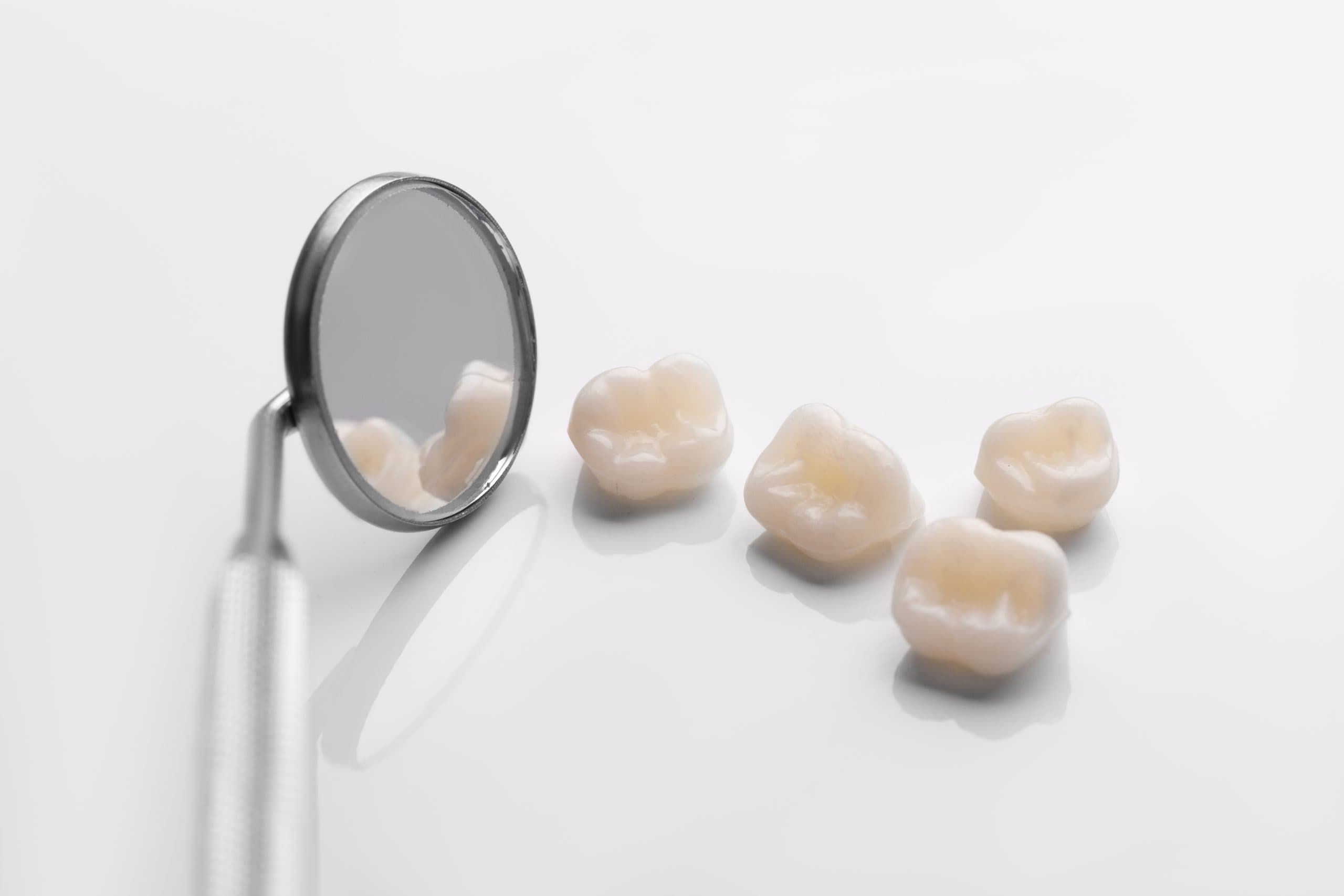
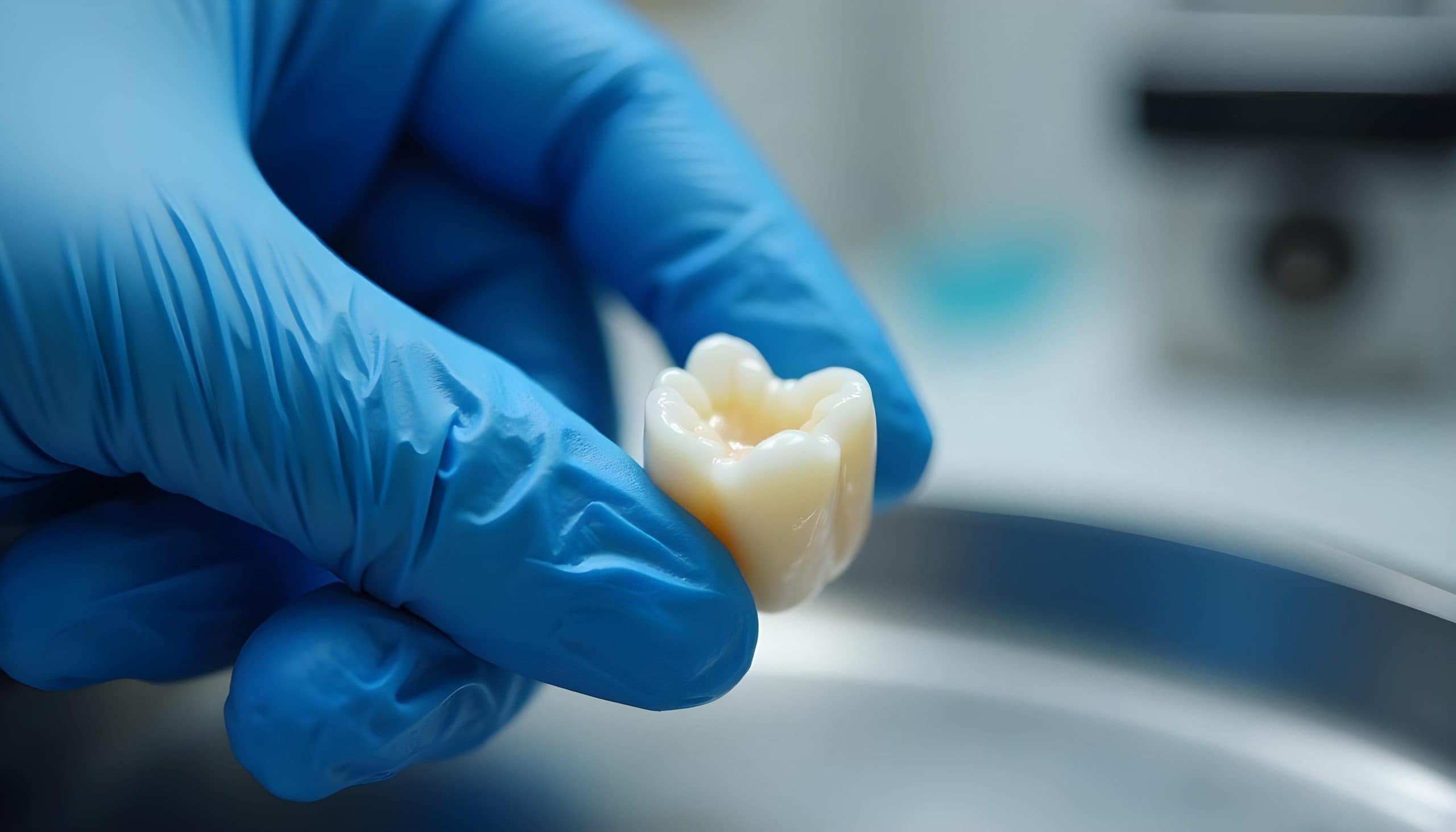
Zirconia crowns are ceramic restorations made from zirconium dioxide. Available formulations offer different balances of strength, translucency, and masking ability, so material selection should reflect the tooth position, available space, esthetic requirements, and functional load. Monolithic and veneered designs can serve different clinical needs. Preparation, processing, and cementation should follow the instructions for the specific zirconia and restorative system selected.
Key Takeaways
Zirconia crowns vary by composition, product, and restoration design; they should not be treated as one interchangeable material.
Higher translucency generally involves a trade-off in mechanical properties, but product-specific data and indications remain essential.
Minimum thickness and preparation requirements depend on the selected material and clinical application.
Zirconia and lithium disilicate require different surface-treatment protocols before cementation.
Shade selection should consider the preparation color, restoration thickness, translucency, and surrounding teeth.
Clinical longevity depends on the restoration, supporting tooth or implant, occlusion, maintenance, and quality of the overall treatment.
Zirconia Crown Selection at a Glance
Factor
What to confirm
Material
Exact product, composition, and approved indications
Restoration design
Monolithic, partially veneered, or fully veneered
Available space
Product-specific minimum thickness and preparation requirements
Esthetics
Target shade, stump shade, translucency, and masking needs
Functional load
Occlusion, parafunction, and supporting structures
Cementation
Compatible cleaning, conditioning, primer, and cement system
Intro
Zirconia is an established option for fixed dental restorations, but choosing it well requires more than requesting a “zirconia crown.” Different products and designs address different combinations of mechanical and esthetic requirements. This guide focuses on zirconia crowns for dental professionals: how material selection affects treatment planning, where zirconia may be appropriate, and what information the laboratory needs before fabrication.
“A zirconia prescription should identify the selected material—or provide enough clinical information for the dentist and laboratory to agree on it.”
What Are Zirconia Crowns Made Of?
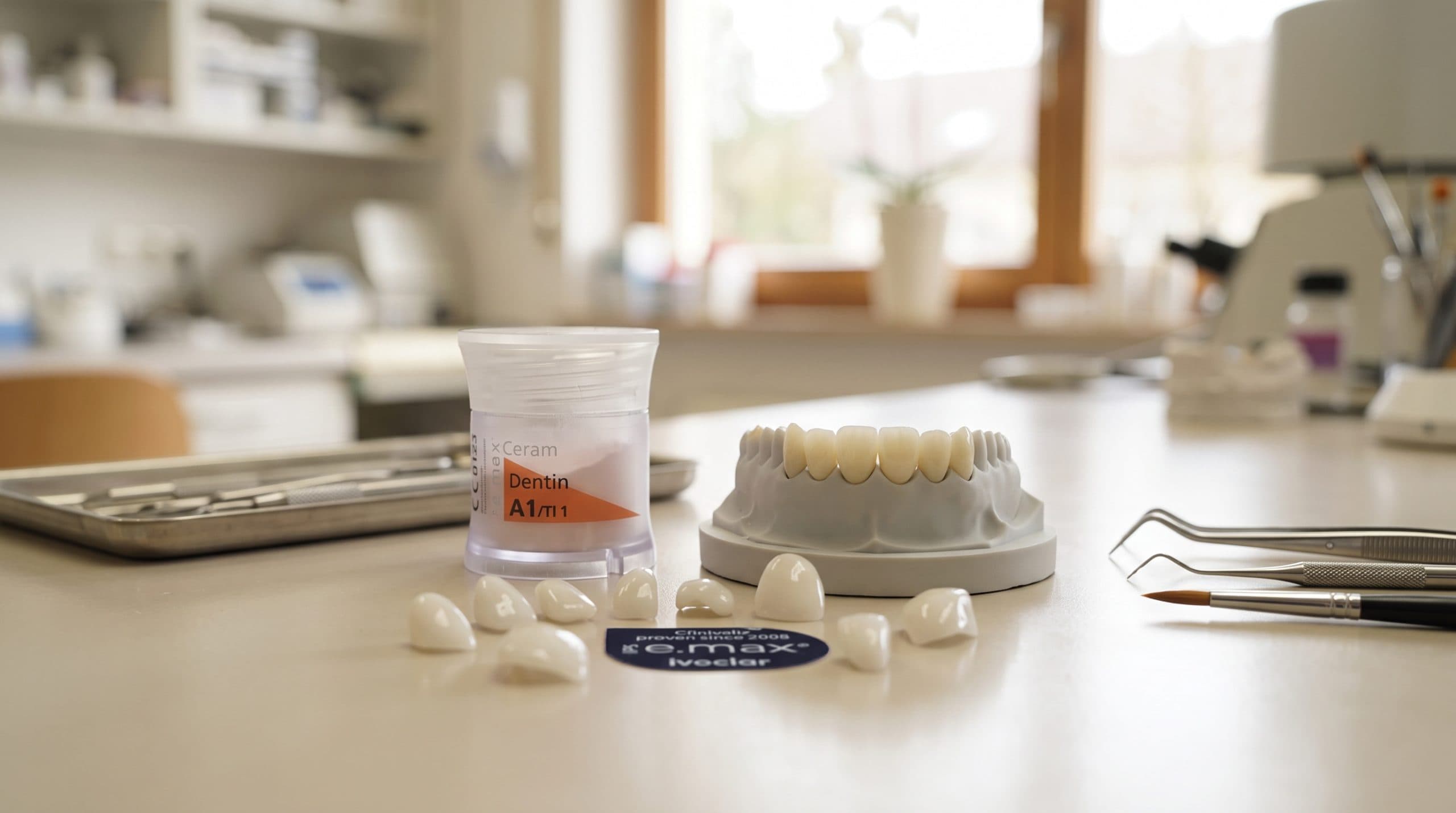
Zirconia crowns are made from zirconium dioxide, a polycrystalline ceramic. Unlike lithium disilicate glass-ceramic, zirconia does not have an etchable glass phase. In a common CAD/CAM workflow, the restoration is milled from a pre-sintered blank and then sintered using the material manufacturer’s specified program. The design compensates for the shrinkage that occurs during sintering. The finished restoration may be monolithic or may use a zirconia framework with veneering ceramic. Composition, processing, and restoration design all influence the final result.
The Strength-Translucency Trade-Off
Increasing yttria content generally improves translucency while reducing transformation toughening and changing mechanical performance. However, strength and optical behavior also depend on the product’s composition, microstructure, processing, and test method.
Material selection should therefore use the manufacturer’s current instructions and the clinical requirements of the case. A more translucent material is not automatically the best choice for an anterior tooth, particularly when a dark preparation needs masking. Likewise, a high-strength material does not remove the need to assess thickness, occlusion, and restoration design.
A published flexural-strength value describes performance under a particular laboratory test. It should not be presented as a direct prediction of crown lifespan or freedom from remakes.
Zirconia category
General tendency
What still needs checking
3Y
Higher toughness and generally lower translucency
Exact product, masking needs, thickness, and indication
4Y
An intermediate balance of optical and mechanical properties
Product-specific strength and permitted applications
5Y
Generally greater translucency with reduced transformation toughening
Load, thickness, and indication restrictions
Composition-gradient zirconia
Properties may vary through the blank
Layer position, nesting, and manufacturer instructions
Monolithic vs. Layered Zirconia
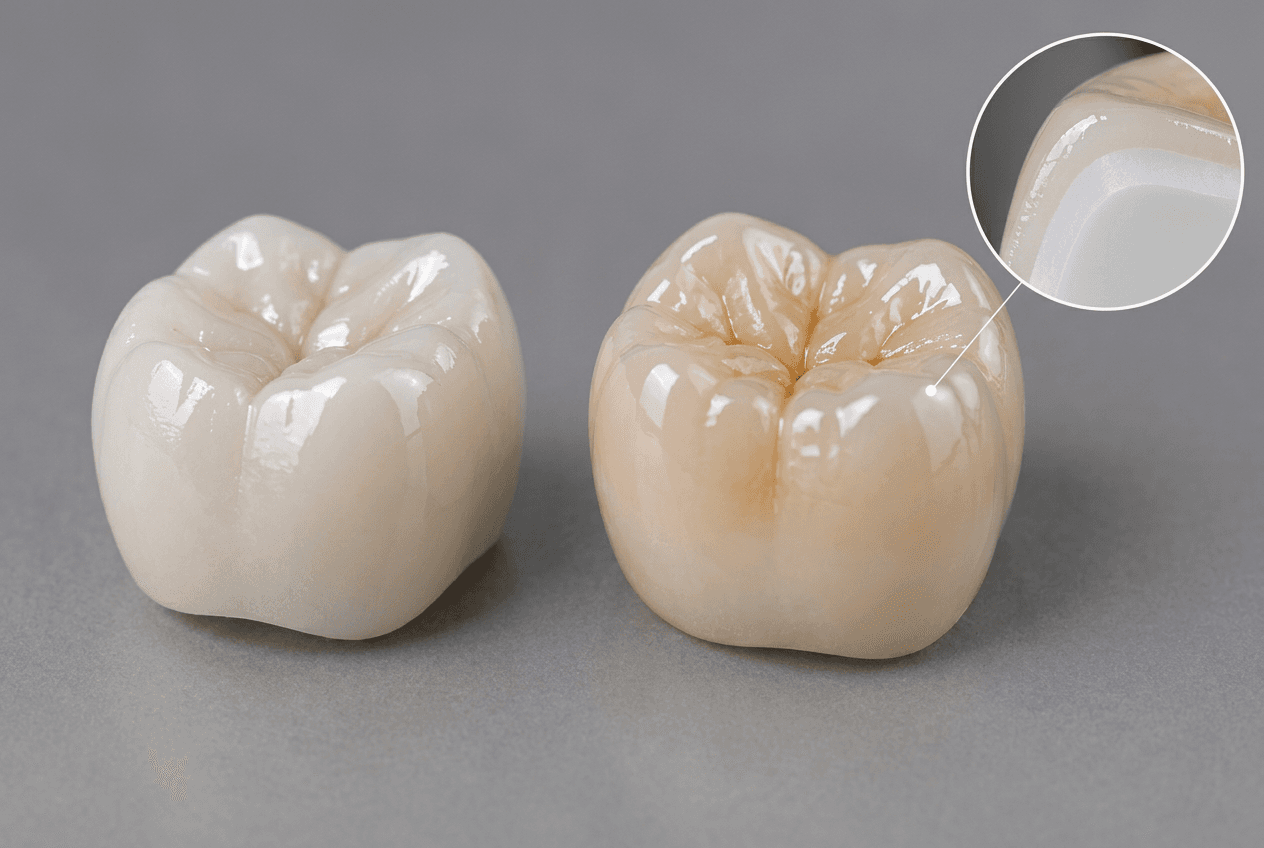
Monolithic zirconia forms the main crown contour without a separate veneering-porcelain layer. This avoids veneering-porcelain chipping as a failure mode, although the restoration can still develop other mechanical or biological complications.
Veneered zirconia combines a zirconia framework with ceramic layering to modify the optical result. It introduces additional design and processing considerations, including support for the veneering ceramic and the risk of chipping.
For fixed restorations, choose the crown design according to the esthetic objective, available space, functional load, and laboratory workflow. Do not assume that every layered crown requires exactly the same additional reduction.
Clinical Applications and Case-Selection Limits
Handsome old man talking to the dendist. Two man in the dentist’s office
Zirconia may be considered for the following applications when the selected product permits them:
Posterior crowns: Assess available space, retention, occlusion, and the material’s preparation requirements.
Patients with parafunction: Evaluate the loading pattern and overall treatment plan. High-strength zirconia is not immune to complications.
Anterior crowns: Select translucency and masking ability according to the preparation shade and intended esthetic result.
Implant-supported crowns: Confirm the implant system, restorative components, connection design, and approved material combination.
Selected bridges: Follow the product’s restrictions for span, connector dimensions, pontics, and restoration position.
Cases with limited space: Check whether the selected zirconia can satisfy its minimum thickness without compromising the clinical design.
Pediatric prefabricated zirconia crowns involve different preparation and placement considerations and should not be grouped with custom adult CAD/CAM crowns under one protocol.
Zirconia vs Resin Crowns and Temporary Options
Provisional crowns protect the prepared tooth and help maintain function, contacts, and soft-tissue conditions before the definitive restoration is placed. Common provisional materials include acrylic and bis-acryl materials, as well as resins indicated for temporary restorations.
Some resin-based materials are also indicated for definitive restorations. Their permitted applications, processing requirements, and clinical evidence should be evaluated separately; they should not be treated as interchangeable with zirconia.
Select the material according to its intended use, expected service conditions, and the requirements of the individual case. Unresolved design or material questions may require laboratory technical support before fabrication.
Preparation and Cementation Considerations
Preparation Confirm the minimum thickness and preparation design using the instructions for the exact zirconia selected, such as the IPS e.max ZirCAD Prime preparation and cementation instructions when that product is prescribed. A single reduction range should not be applied to every monolithic, translucent, veneered, or bridge restoration. Provide smooth preparation surfaces, rounded internal transitions, and adequate space for the planned restoration. Evaluate retention and resistance form, margin quality, and occlusal clearance with the laboratory before fabrication.
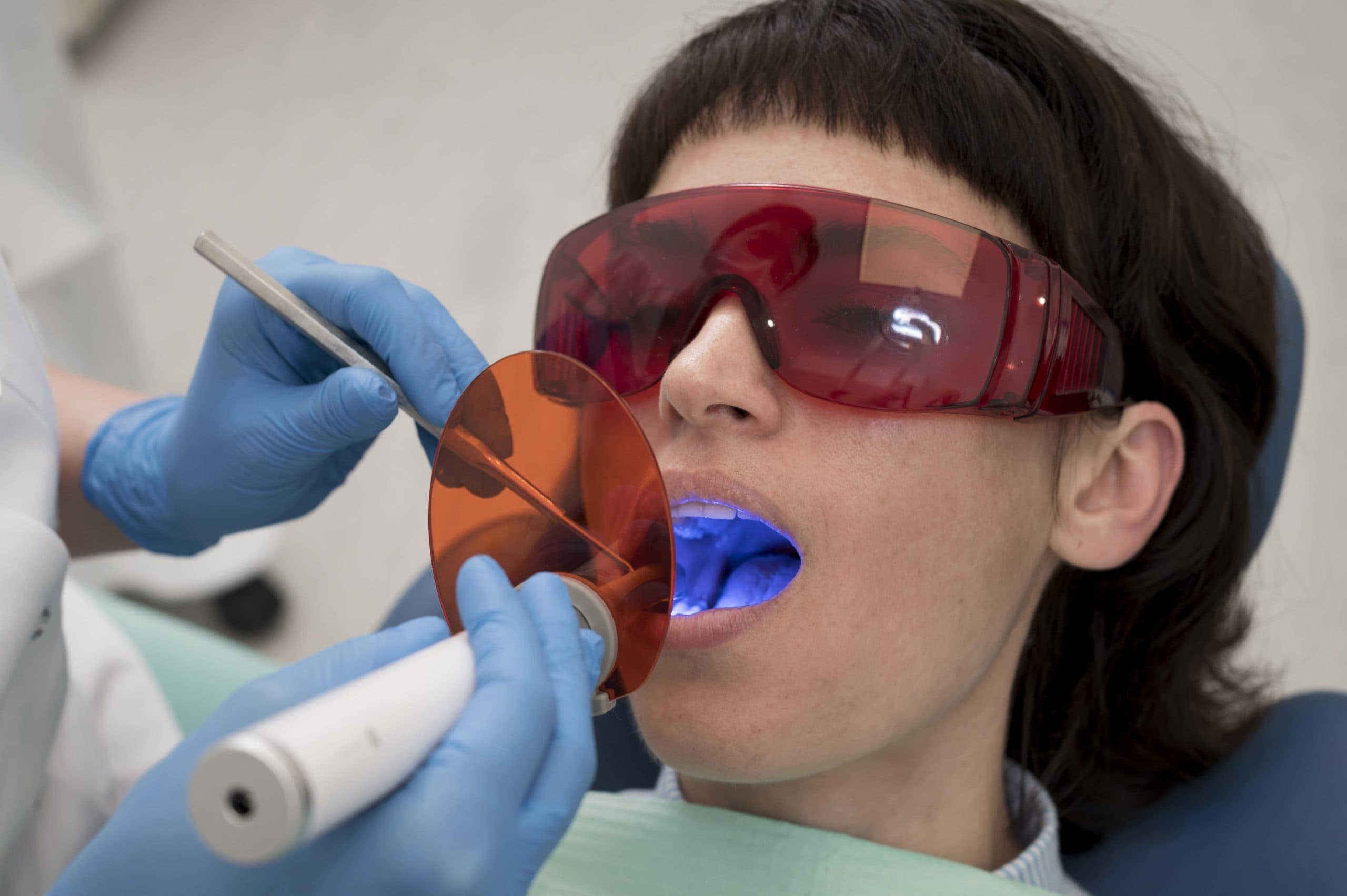
Cleaning and Cementation Select a cementation method compatible with the restoration and preparation. Conventional or self-adhesive cementation may be suitable for some adequately retentive preparations when permitted by the relevant instructions.
When adhesive bonding is indicated, use a validated protocol for the selected zirconia and cement system. This may include controlled airborne-particle abrasion and an MDP-containing primer or cement. Cleaning after try-in, treatment sequence, and abrasion settings must follow the applicable product instructions.
Hydrofluoric acid does not provide the glass-etching treatment used for lithium disilicate on zirconia. A restoration cleaner such as KATANA Cleaner does not replace the required primer or other bonding steps and should be used according to its instructions.
Adjustment and Surface Finishing
After occlusal adjustment, finish and polish zirconia with a system intended for the material. An adjusted surface should not be left rough. Surface condition influences opposing-tooth wear, so the clinical checks should include both occlusion and the quality of the final polish.
Longevity and Maintenance
Zirconia crowns can show favorable clinical survival, but results vary with the product, restoration design, patient selection, and definition of failure. In a prospective study of 50 posterior monolithic zirconia crowns, survival was 98% at five years. This finding does not establish the same outcome for every zirconia product or a guaranteed ten-year service life.
Survival is also different from remaining free of complications. Follow-up should assess retention, margins, supporting tooth structure, periodontal health, occlusion, and any mechanical damage.
Patients should maintain daily plaque control and attend individualized recall visits. For patients with bruxism or other parafunction, the clinician should assess protective measures and ongoing monitoring.
What Zirconia Crowns Cost the Practice
Laboratory fees vary by restoration design, material, characterization, implant components, turnaround requirements, and included services. Obtain a current quotation for the prescribed case rather than relying on a single market-wide price range. Compare what the fee includes, such as design review, models, shipping, and the applicable remake or warranty terms. The practice’s total cost also includes clinical time, adjustments, and any additional appointments. Laboratory fees should not be confused with the patient’s treatment fee.
What to Include in a Zirconia Crown Prescription
Tooth number and restoration type.
Tooth-supported or implant-supported design, including relevant component details.
Selected zirconia product, or the clinical information needed to agree on a suitable material.
Monolithic or veneered design preference.
Target shade, stump shade, and suitable clinical photographs.
Preparation, opposing-arch, and bite records.
Available clearance and any concerns about preparation geometry.
Parafunction, occlusal considerations, and relevant prior complications.
Any requested design approval and the required delivery date.
Zirconia crowns offer a range of restorative options, but successful use depends on selecting the appropriate product and design for the case. Strength, esthetics, preparation, surface treatment, and clinical maintenance should be considered together.
Clear communication with the laboratory helps establish the clinical requirements before fabrication. Use the relevant manufacturer instructions throughout preparation, fabrication, and cementation.
Frequently Asked Questions
What are the disadvantages of zirconia crowns?
Limitations depend on the material and design. They can include esthetic challenges when translucency or masking is poorly matched to the case, veneering-ceramic chipping in layered restorations, and opposing-tooth wear associated with unsuitable surface finishing. Zirconia also requires a different bonding protocol from glass-ceramics.
How long will a zirconia crown last?
Zirconia crowns can provide many years of service, but no single lifespan applies to every case. Published outcomes depend on the material, restoration design, supporting structures, and follow-up period. A five-year survival result should not be presented as a guaranteed ten- or fifteen-year lifespan.
Is zirconia better than other crown materials?
No crown material is best for every situation. Compare the selected zirconia with the specific alternative using esthetics, available space, retention, loading, bonding requirements, and clinical evidence.
What does a zirconia crown cost?
Costs vary by case and provider. A laboratory fee covers the laboratory’s work and is different from the patient’s overall treatment fee. Request a current quotation that identifies the restoration design and included services.
What is a zirconia crown made of?
A zirconia crown is made from zirconium dioxide ceramic. Dental formulations commonly use yttria stabilization. Composition, processing, and design influence their mechanical and optical properties.
Can dentists see decay under a zirconia crown on X-rays?
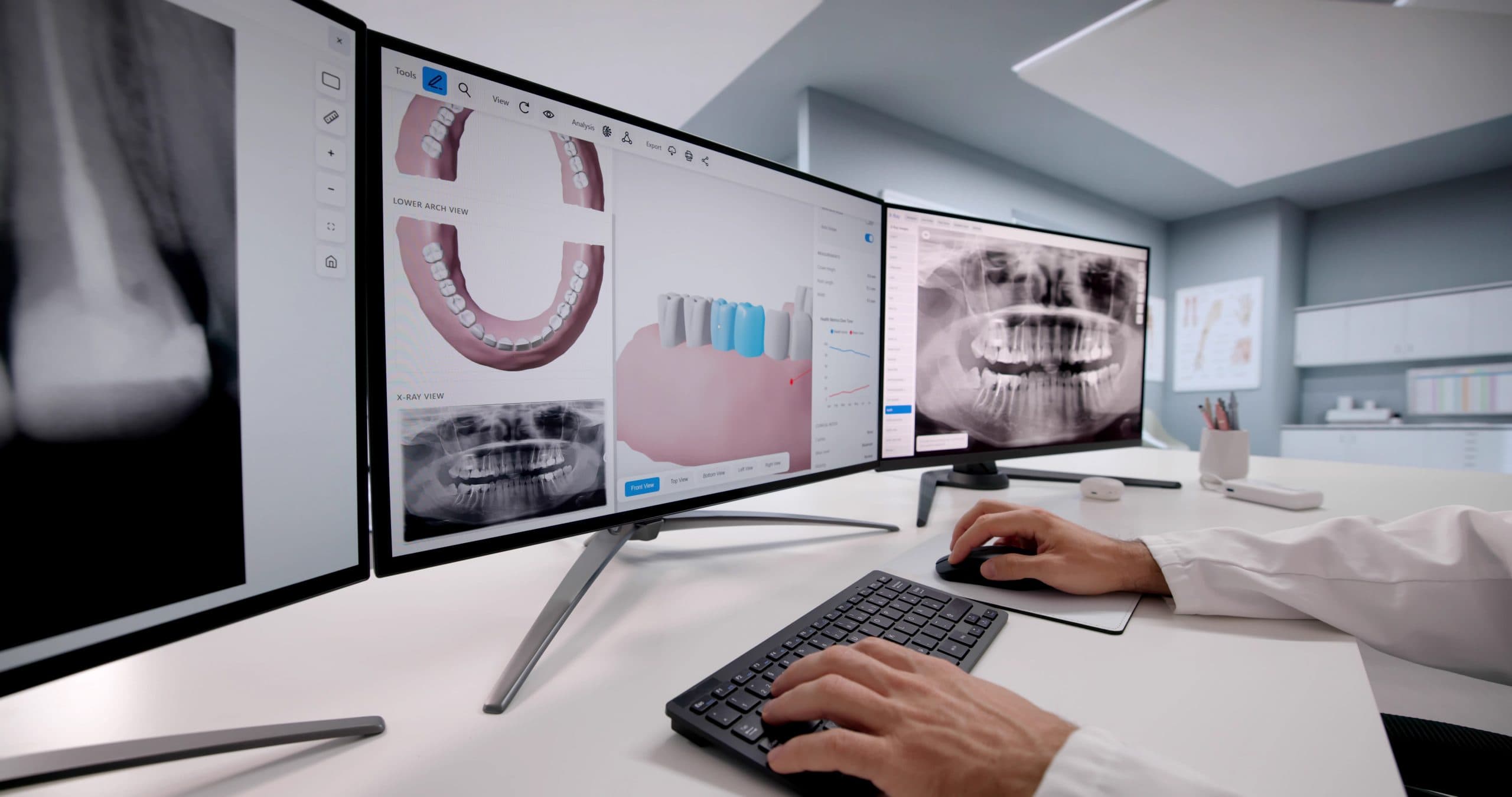
Zirconia is highly radiopaque and can obscure structures behind it. Radiographs may help assess accessible margins and surrounding tissues, but they do not reliably reveal all decay beneath a crown. Diagnosis combines clinical findings with appropriately selected imaging.
Is zirconia more predictable than lithium disilicate?
Predictability depends on the indication, product, restoration design, and clinical technique. Neither material is universally superior. Compare the requirements of the individual case rather than choosing from flexural-strength figures alone.
Do crowns need cleaning after try-in?
Follow the cleaning instructions for the restoration material and cement system after contamination during try-in. Cleaning, surface conditioning, and priming are separate steps. Zirconia and lithium disilicate should not automatically receive the same treatment.
Do zirconia crowns look natural?
They can, when material selection, thickness, shade, surface characterization, and the underlying preparation are managed appropriately. Greater translucency does not always improve the result, especially when masking is needed.
Are zirconia crowns safe for patients with metal allergies?
A zirconia crown body is ceramic rather than a metallic alloy. However, an implant-supported restoration may include a titanium base, screw, or other metal components. Evaluate the complete restorative assembly and the patient’s documented allergy history.