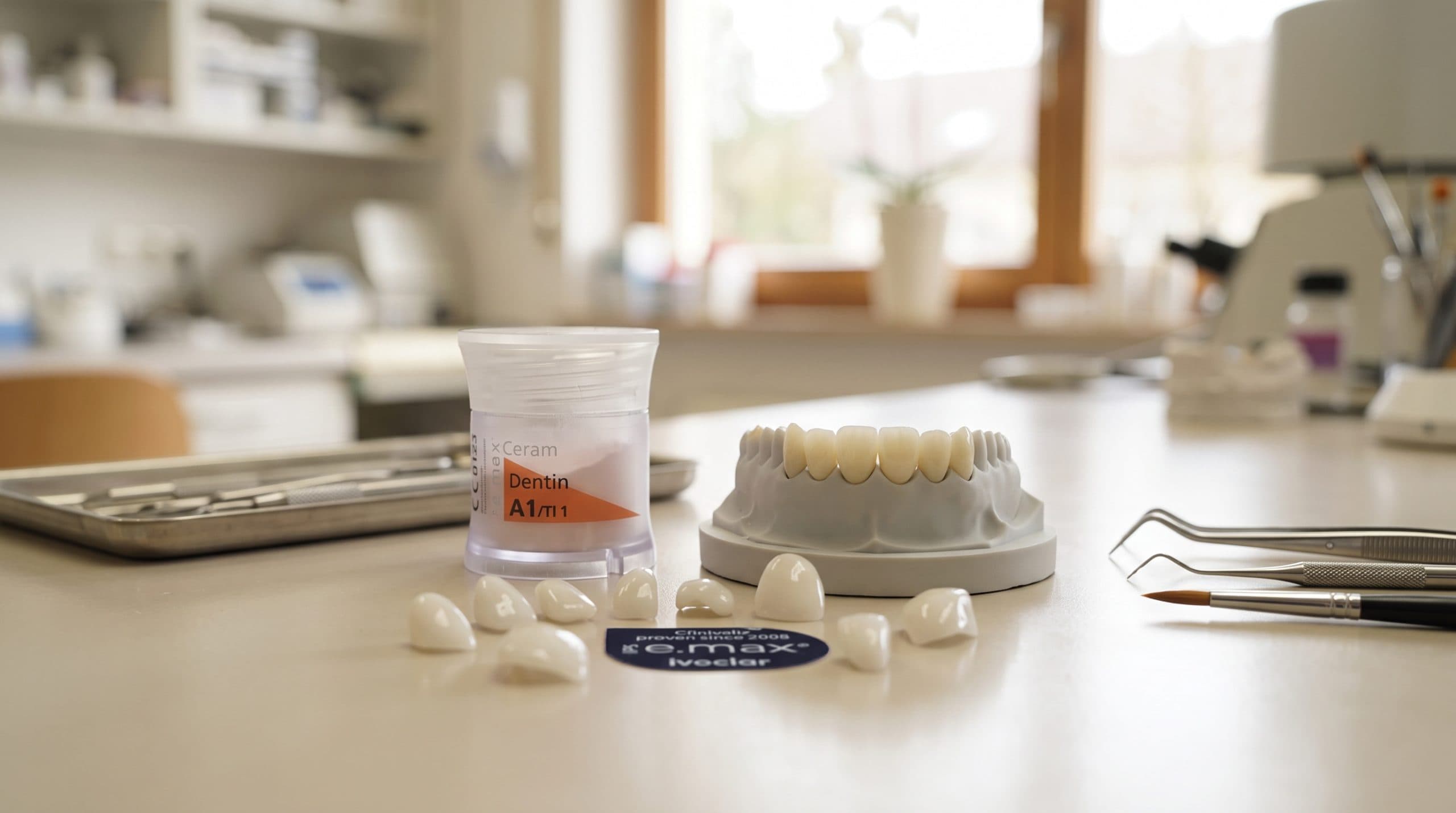
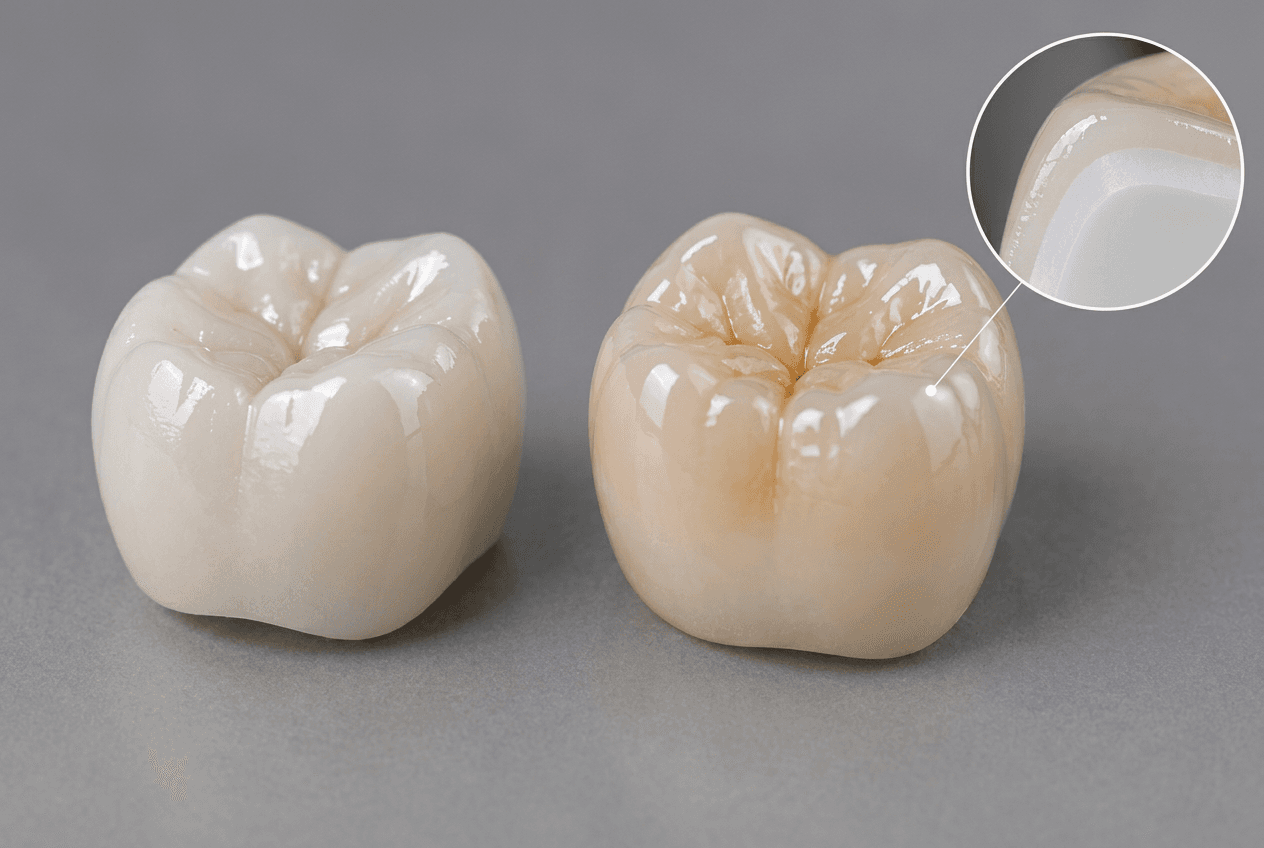
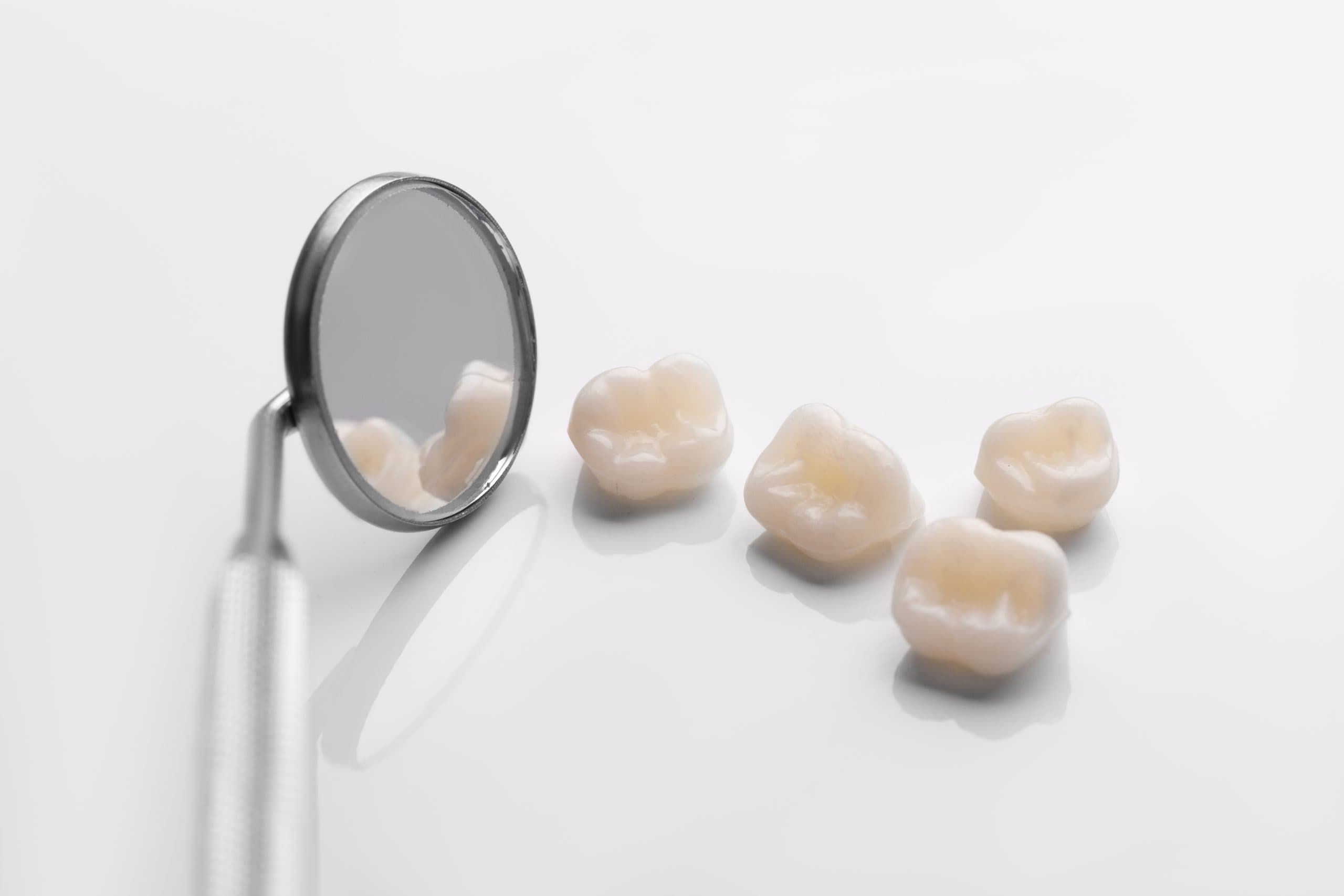
Choosing between e.max vs zirconia crowns requires more than a front-tooth or back-tooth rule. Lithium disilicate and zirconia offer different combinations of optical properties, mechanical performance, and surface-treatment requirements. The appropriate choice depends on the specific product, restoration design, preparation, available space, occlusion, and esthetic goals.
In this article, “e.max” refers to IPS e.max CAD or Press lithium disilicate, rather than the zirconia products also sold within the IPS e.max family.
Key Takeaways
Tooth position helps frame the decision, but it does not determine the material by itself.
Zirconia products differ in composition, strength, translucency, and approved indications.
Lithium disilicate offers adhesive options, while zirconia can also be bonded using an appropriate material-specific protocol.
Dark preparations require a masking strategy; greater translucency is not always an advantage.
Bruxism and limited clearance require careful assessment rather than an automatic material prescription.
Compare current case-specific quotations and included services instead of assuming a universal price difference.
Overview
Both lithium disilicate and zirconia are used in fixed restorations, but they are not interchangeable in every clinical situation. A useful comparison considers the selected material system and the requirements of the individual case.
This guide is written for dental teams discussing crown selection with a laboratory. It compares the factors that influence the prescription, including esthetics, mechanical requirements, preparation design, cementation, and communication.
Strength: Compare Products, Not Just Material Names
Flexural-strength values describe performance under defined laboratory test conditions. They do not directly predict how long an individual crown will last.
High-strength zirconia formulations generally provide greater flexural strength than lithium disilicate, but zirconia formulations differ in composition and optical and mechanical properties. Processing and restoration design also influence the final result.
Compare the selected zirconia’s specifications with the IPS e.max CAD material data when considering a milled lithium disilicate alternative, noting the stated test methods and approved indications. Clinical planning must also account for thickness, support, occlusion, and the condition of the supporting tooth.
Esthetics: Translucency, Masking, and Shade Matching
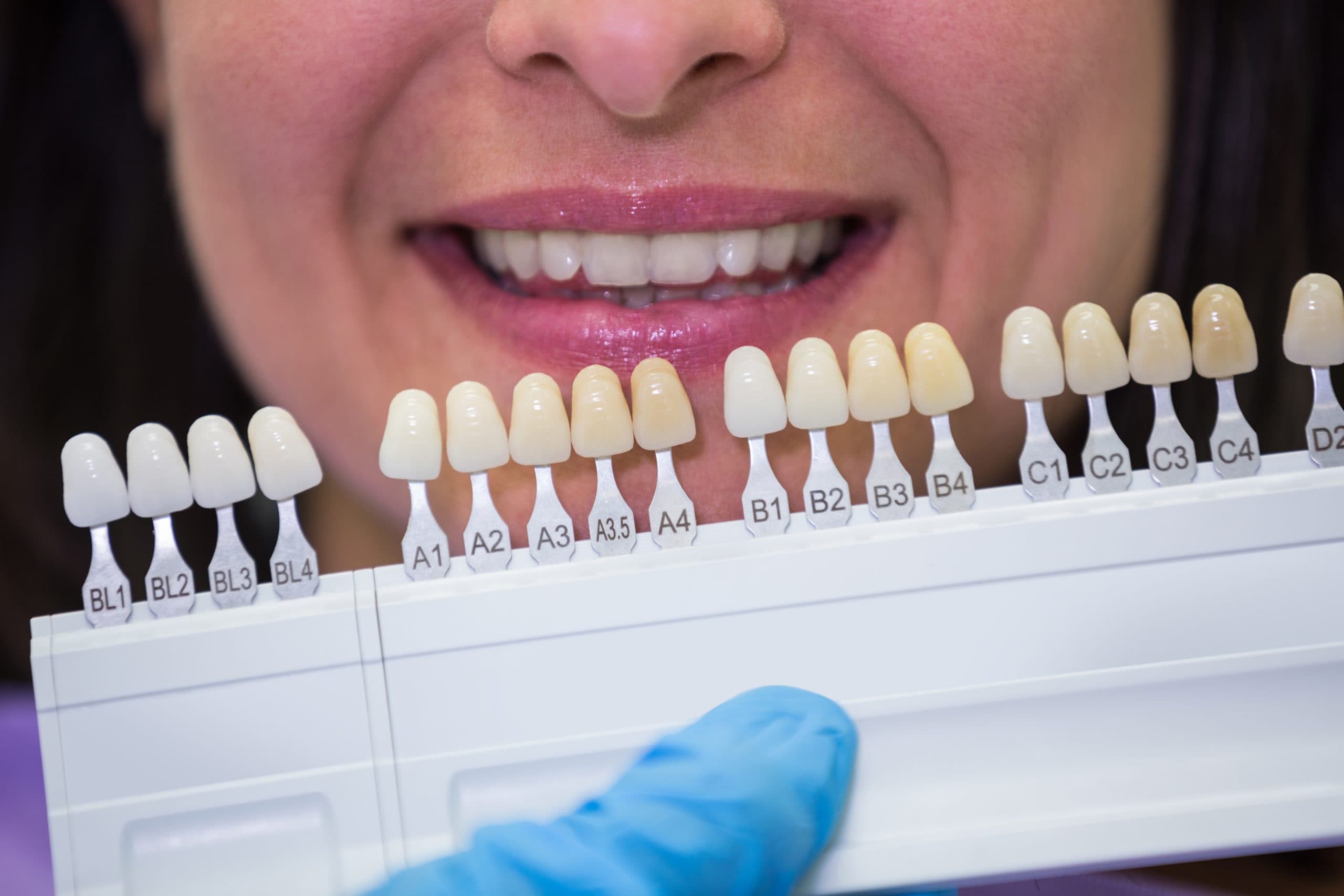
Esthetic selection involves more than choosing the most translucent material. The preparation shade, restoration thickness, neighboring teeth, cement shade, and surface characterization all influence the result.
Lithium disilicate and zirconia systems offer different optical options. A translucent restoration may suit one case but reveal an unwanted dark substrate in another.
For demanding anterior cases, share stump-shade photographs and esthetic references with the laboratory before agreeing on the material and design. Assess masking needs as carefully as translucency.
Factor
IPS e.max CAD/Press lithium disilicate
Zirconia
Material structure
Glass-ceramic
Polycrystalline ceramic
Optical selection
Translucency and opacity options depend on the product
Translucency and masking vary by formulation and design
Mechanical properties
Consult the selected product’s data
Consult the exact formulation and product data
Preparation
Follow restoration-specific thickness and design requirements
Follow product-specific thickness and design requirements
Surface treatment
Use the prescribed glass-ceramic conditioning protocol
Use the prescribed zirconia conditioning protocol
Cementation
Method depends on the restoration, preparation, and instructions
Method depends on the restoration, preparation, and instructions
Parafunction
Assess suitability and any product restrictions
Assess suitability; higher strength does not eliminate risk
Laboratory fee
Obtain a current case-specific quotation
Obtain a current case-specific quotation
This comparison summarizes material-selection considerations. It does not replace the instructions for the specific restoration and cement system. Explore our fixed restoration options.
Cementation and Bonding: Different Surface Treatments
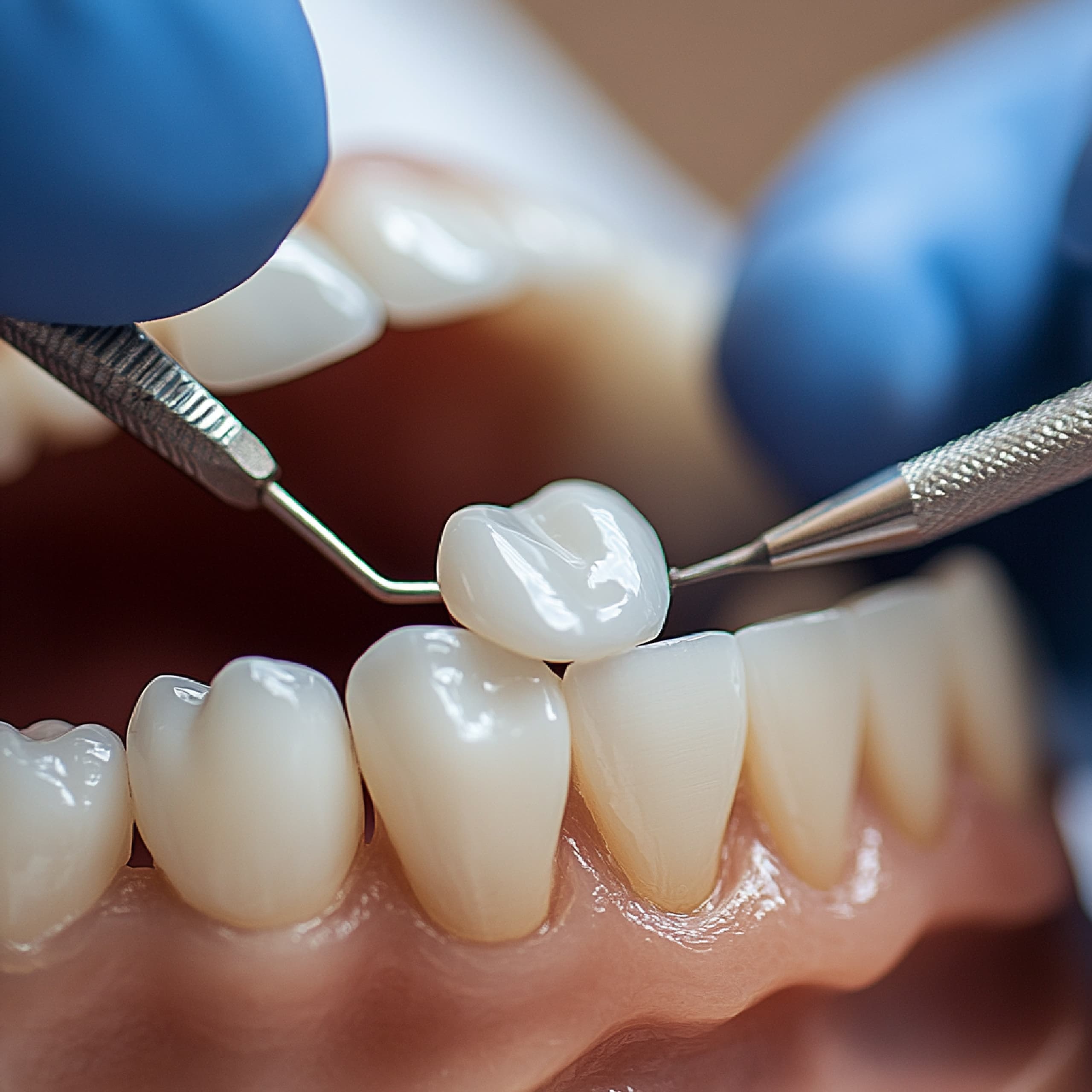
Dentist examining a female patient with tools at dental clinic
Lithium disilicate and zirconia require different restoration-surface treatments. For adhesive procedures, lithium disilicate uses a manufacturer-approved glass-ceramic conditioning protocol, while zirconia requires a protocol suitable for an oxide ceramic.
Zirconia bonding may involve controlled airborne-particle abrasion and an MDP-containing primer or cement, according to the selected system. Hydrofluoric acid does not provide the glass-etching treatment used for lithium disilicate on zirconia.
Cementation method should be selected alongside preparation design, isolation, restoration thickness, and the instructions for the chosen product, such as the IPS e.max ZirCAD Prime preparation and cementation instructions when that zirconia is prescribed. Adhesive cementation should not be presented as an automatic solution for an inadequately retentive preparation.
Case-Selection Questions to Discuss with the Lab
Clinical situation
What to evaluate
Anterior crown
Shade matching, preparation color, masking, thickness, and loading
Posterior crown
Product indication, available space, occlusion, and preparation geometry
Bruxism or visible wear
Functional risk, material restrictions, restoration design, and protective measures
Dark preparation or post-and-core
Substrate color, opacity options, available thickness, and cement effects
Short or over-tapered preparation
Retention, resistance form, isolation, and whether the preparation or treatment plan needs revision
Implant-supported crown
Approved restorative system, components, connection design, and space requirements
Limited clearance
Whether the selected product’s minimum dimensions can be achieved
Use these questions to identify the requirements of the case before selecting a material. Complex cases may require technical support to clarify design and component requirements. Neither a tooth number nor a single strength value is enough to complete the prescription.
What to Include in the Laboratory Prescription
Dentist examining female patient with teeth shades at dental clinic
Tooth number and restoration type.
Proposed material and any alternatives under consideration.
Preparation, opposing-arch, and bite records.
Target shade, stump shade, and suitable photographs.
Available clearance and any preparation concerns.
Relevant occlusal findings and parafunction history.
Implant-system and component details when applicable.
Monolithic or veneered design preference.
Design-review requirements and the requested delivery date.
A clear case submission workflow helps organize the prescription and supporting records. Missing information and discrepancies between the prescription and the records should be resolved with the laboratory before fabrication.
Final Thoughts
The choice between lithium disilicate and zirconia should follow the requirements of the case. Evaluate the selected product’s indications, optical properties, preparation requirements, and cementation protocol together. Communication with the laboratory before fabrication should cover the clinical records and esthetic goals. A suitable material choice is one that fits the restoration, supporting structures, and planned workflow.
Frequently Asked Questions
Which is stronger, e.max or zirconia?
High-strength zirconia formulations generally have greater flexural strength than lithium disilicate. However, values vary by product and test method, and strength alone does not determine the best crown material for a particular case.
Which looks more natural, e.max or zirconia?
Both can produce natural-looking restorations. The outcome depends on the selected material, preparation shade, thickness, characterization, and surrounding teeth. Greater translucency is not always preferable when masking is required.
Can e.max crowns be used on molars?
Lithium disilicate products include posterior crown applications. Suitability depends on the specific product, preparation, thickness, occlusal conditions, and any contraindications. Molar position alone should not determine the prescription.
Do e.max and zirconia crowns cement differently?
Their restoration-surface treatments differ. Cementation method also depends on the preparation and selected system. Follow the applicable instructions rather than assuming all lithium disilicate crowns must be bonded or all zirconia crowns must be conventionally cemented.
What do e.max and zirconia crowns cost from the lab?
Laboratory fees vary with material, restoration design, characterization, components, and included services. Request current quotations for comparable cases. Laboratory fees are different from the patient’s overall treatment fee.