A monolithic zirconia crown has a full-contour zirconia body without a separate veneering-porcelain layer. Layered zirconia combines a zirconia framework with veneering ceramic to customize the esthetic result. Monolithic designs avoid veneering-porcelain chipping, but they are not immune to damage or fracture. The appropriate design depends on the selected material, available space, occlusion, preparation shade, and esthetic requirements.
Key Takeaways
Monolithic zirconia has no separate veneering-porcelain layer, but the crown can still develop mechanical or biological complications.
Layered zirconia allows additional ceramic characterization while introducing veneering-related design and processing requirements.
Zirconia composition and crown design are separate choices: a monolithic crown is not automatically a high-strength 3Y restoration.
Preparation requirements depend on the specific product and design; one reduction range does not apply to every crown.
Material selection should consider function, available space, masking needs, and the intended esthetic result.
The prescription should identify the proposed design and provide enough clinical information for the dentist and laboratory to confirm its suitability.
Introduction
Monolithic and layered zirconia represent different approaches to crown construction. The distinction affects the restoration’s appearance, space requirements, fabrication process, and potential complications.
For these fixed restorations, design selection begins with the requirements of the case. A posterior crown, an anterior crown beside natural teeth, and a restoration over a discolored preparation may need different solutions, even when all are described as zirconia crowns.
What Is a Monolithic Zirconia Crown?
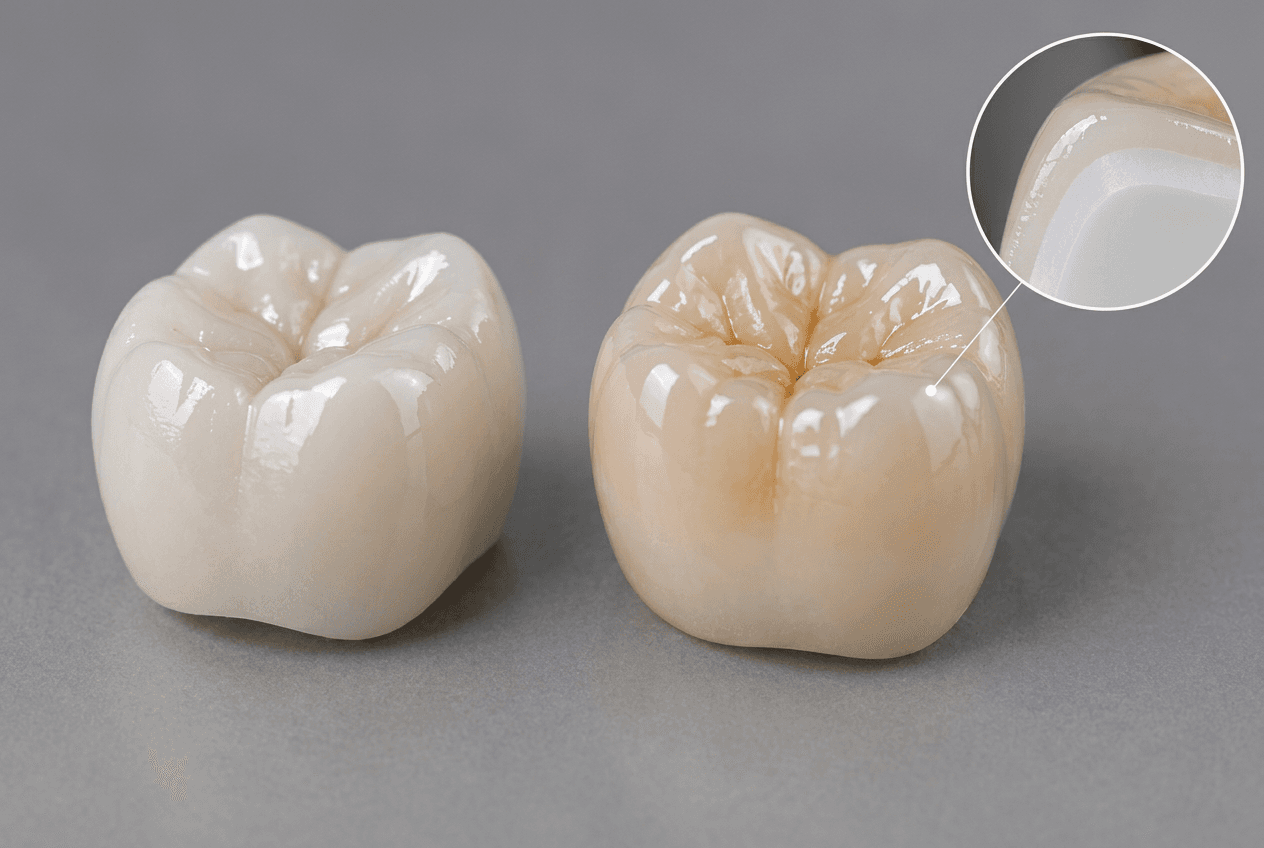
Illustrated cross-sections comparing monolithic zirconia construction with a zirconia core covered by veneering porcelain.
A monolithic zirconia crown is fabricated to its principal anatomical contour in zirconia, without a separate veneering-porcelain layer. In a common workflow, it is milled from a pre-sintered blank, sintered, and finished according to the selected material’s instructions. Characterization may include polishing, staining, or glazing.
The term “monolithic” describes the restoration’s construction, not a single composition or strength category. Differences among zirconia formulations affect optical and mechanical properties, so the exact product matters alongside the crown design.
A multilayer zirconia blank should not be confused with a porcelain-layered crown. A crown milled from a blank with shade or composition gradients can still be monolithic if no separate veneering ceramic is added.
What Layered Zirconia Adds—and What It Requires
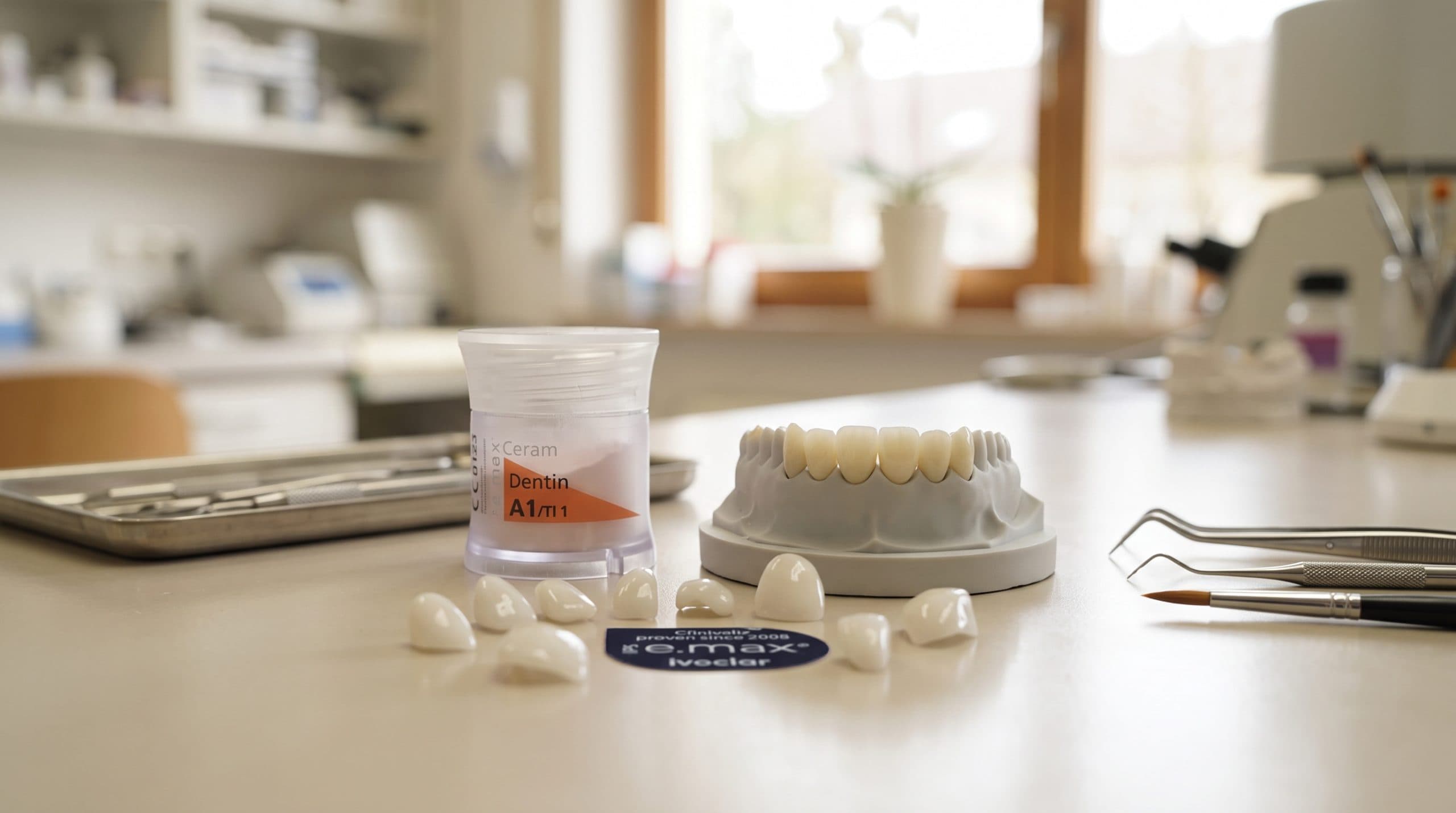
Shade variation, surface texture, and incisal translucency are visible details considered when matching anterior crowns.
Layered zirconia combines a zirconia framework with a compatible veneering ceramic. The additional ceramic allows the technician to modify color, translucency, surface texture, and other optical features. Whether it improves the result depends on the clinical objective, available space, and execution.
Veneering may cover selected surfaces or a larger portion of the restoration. A facially veneered crown with zirconia occlusal contacts is a different design from a more extensively veneered crown and should be specified clearly.
Layering introduces requirements for framework support, ceramic thickness, material compatibility, and firing. It can also increase laboratory work and cost. These considerations should be evaluated for the prescribed design rather than assumed from the word “layered.”
Monolithic vs Layered Zirconia at a Glance
Factor
Monolithic zirconia
Layered zirconia
Construction
Full-contour zirconia without a separate porcelain veneer
Zirconia framework with veneering ceramic
Esthetic customization
Depends on zirconia selection, thickness, and surface characterization
Adds customization through veneering ceramic
Chipping considerations
Avoids veneering-porcelain chipping; other damage remains possible
Includes the possibility of veneer chipping
Space requirements
Follow the selected zirconia’s instructions
Allow for the prescribed framework and veneer
Material selection
Composition and indications still matter
Framework and veneering materials must be compatible
Prescription
Specify the product and full-contour design
Specify veneer location and functional contact surfaces
Laboratory fee
Obtain a case-specific quotation
Confirm additional design and layering charges
Preparation and Space Requirements
Determine preparation requirements from the exact zirconia product and planned restoration design. The manufacturer’s minimum restoration thickness should not be treated as a universal amount of tooth reduction.
Product-specific guidance, such as the IPS e.max ZirCAD Prime preparation instructions, distinguishes between monolithic and veneered designs. Apply the instructions relevant to the product prescribed rather than transferring one system’s dimensions to every zirconia crown.
Before fabrication, assess available space, preparation geometry, margin quality, and the planned functional contacts. If the requirements cannot be met, reconsider the design or treatment plan with the laboratory.
Understanding Chipping Risk
Veneering-ceramic chipping is one possible complication of layered zirconia. Contributing factors can include ceramic support and thickness, processing, residual stresses, and functional loading.
Laboratory research on cooling and residual stresses in veneered zirconia found that cooling conditions can influence stresses within the porcelain. Such findings support following the validated firing and cooling schedule for the selected material combination; they do not establish one universal protocol or guarantee freedom from chipping.
Monolithic construction removes the separate porcelain veneer and its associated chipping mechanism. It does not eliminate the possibility of zirconia damage, crown fracture, loss of retention, or complications involving the supporting tooth.
Choosing the Design for the Case
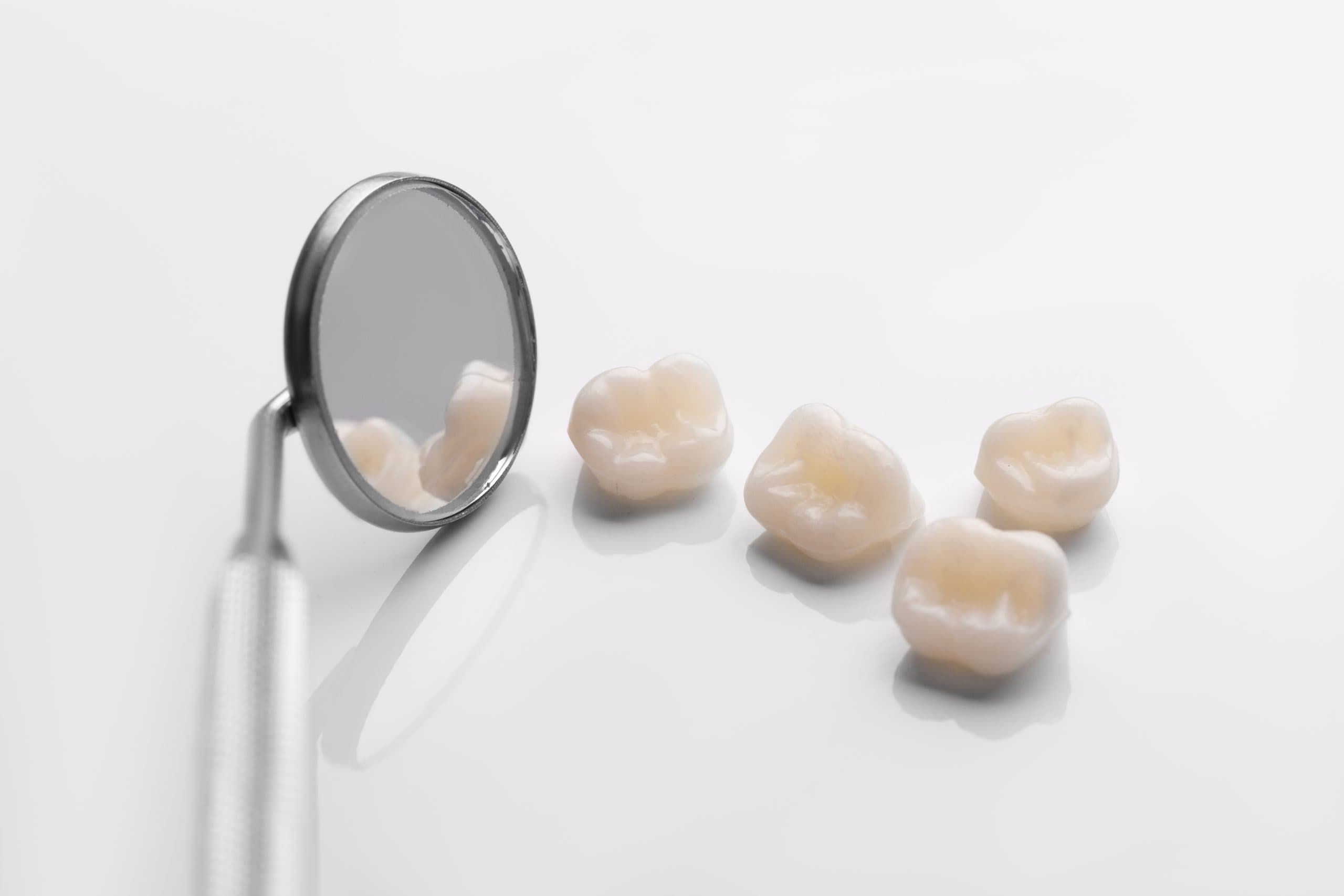
Dental restorations with different shapes and contours, illustrating the range of designs considered during case planning.
Clinical situation
What to consider
Posterior crown
Functional contacts, available space, material indication, and whether veneering offers a useful esthetic benefit
Bruxism or parafunction
Loading, restoration design, product restrictions, and an appropriate risk-management plan
Single anterior crown
Neighboring teeth, preparation shade, masking, translucency, and surface characterization
Multiple anterior crowns
Facial appearance, adjacent and opposing teeth, phonetics, occlusion, and the patient’s esthetic goals
Limited clearance
Whether the selected design can meet its minimum material dimensions
Dark preparation
Opacity, thickness, cement effects, and the planned masking strategy
Partial veneering
Where veneer is needed and whether functional contacts should remain on zirconia
Cases with conflicting esthetic and functional requirements may need laboratory technical support before the design is finalized. Neither tooth position nor visible wear alone provides a complete material prescription.
The selected zirconia product, or the information needed to agree on it.
Monolithic, partially veneered, or more extensively veneered construction.
Veneering surfaces and planned functional contact areas.
Target shade, stump shade, and suitable clinical photographs.
Preparation, opposing-arch, and bite records.
Available clearance, parafunction, and relevant previous complications.
Any requested design review and the required delivery date.
Design descriptions such as “full-contour monolithic zirconia” or “zirconia crown with facial veneering and monolithic occlusal contacts” help communicate the intended construction. The clinician and laboratory should confirm that the selected product and design fit the case.
Comparing Laboratory Costs
Compare current quotations for the same restoration type and service scope. Layering can add design, ceramic application, firing, and finishing work, but fees vary by laboratory and case.
Confirm whether the quotation includes models, design review, shipping, characterization, and applicable remake terms. Laboratory fees are separate from the patient’s overall treatment fee.
Final Thoughts
Monolithic and layered zirconia serve different restorative requirements. Monolithic construction avoids a separate porcelain veneer, while layered designs provide additional options for ceramic characterization. Neither approach guarantees an esthetic result or freedom from complications.
Clear communication with the laboratory should establish the material, restoration design, functional requirements, and esthetic goals before fabrication.
Frequently Asked Questions
What is a monolithic zirconia crown?
A monolithic zirconia crown has a full-contour zirconia body without a separate veneering-porcelain layer. It may be polished, stained, or glazed according to the selected system. The absence of veneering porcelain does not make the crown immune to damage or fracture.
What is the difference between monolithic and layered zirconia?
Monolithic zirconia forms the principal crown contour in zirconia. Layered zirconia uses a zirconia framework with additional veneering ceramic. The designs differ in esthetic customization, space requirements, fabrication, and potential complications.
Do monolithic zirconia crowns look natural?
They can, when material selection, thickness, shade, and surface characterization suit the case. A more translucent material is not always preferable, particularly over a dark preparation. Layering may help achieve specific optical goals but does not automatically produce a better result.
Why can layered zirconia crowns chip?
The veneering ceramic can chip under mechanical and residual stresses. Risk is influenced by the restoration design, ceramic support and thickness, material compatibility, processing, and loading. Appropriate fabrication reduces avoidable risks without eliminating all complications.
How much reduction does a monolithic zirconia crown need?
Follow the preparation and thickness requirements for the exact product and restoration design. There is no single reduction range for all monolithic zirconia crowns. Available space, anatomy, margin design, and cementation requirements must be assessed together.
Which is stronger, monolithic or layered zirconia?
Monolithic designs avoid a separate veneering ceramic that can chip. However, comparing the strength of complete crowns requires more than comparing the flexural-strength values of zirconia and porcelain. Material composition, thickness, design, support, and loading all matter.
Can monolithic zirconia be used for anterior teeth?
Yes, when the selected product and design suit the clinical and esthetic requirements. Evaluate preparation shade, masking, surrounding teeth, thickness, and functional contacts. Multiple anterior crowns must meet these requirements as well as match one another.
Is monolithic zirconia suitable for patients with bruxism?
It may be considered in appropriate cases, but it is not a guarantee against failure. Assess the selected product’s indications and restrictions, available thickness, occlusion, and supporting structures. Parafunction also requires an individualized management and follow-up plan.
How much does a monolithic zirconia crown cost from the lab?
Fees depend on the laboratory, product, restoration design, characterization, and included services. Obtain a current case-specific quotation and compare equivalent service packages. Layered work may cost more because of the additional fabrication steps.
Should I specify monolithic or layered on the lab prescription?
Yes. Specify the intended construction, material when known, and any veneering surfaces. Include the clinical records and functional and esthetic requirements so the laboratory can identify questions before fabrication.