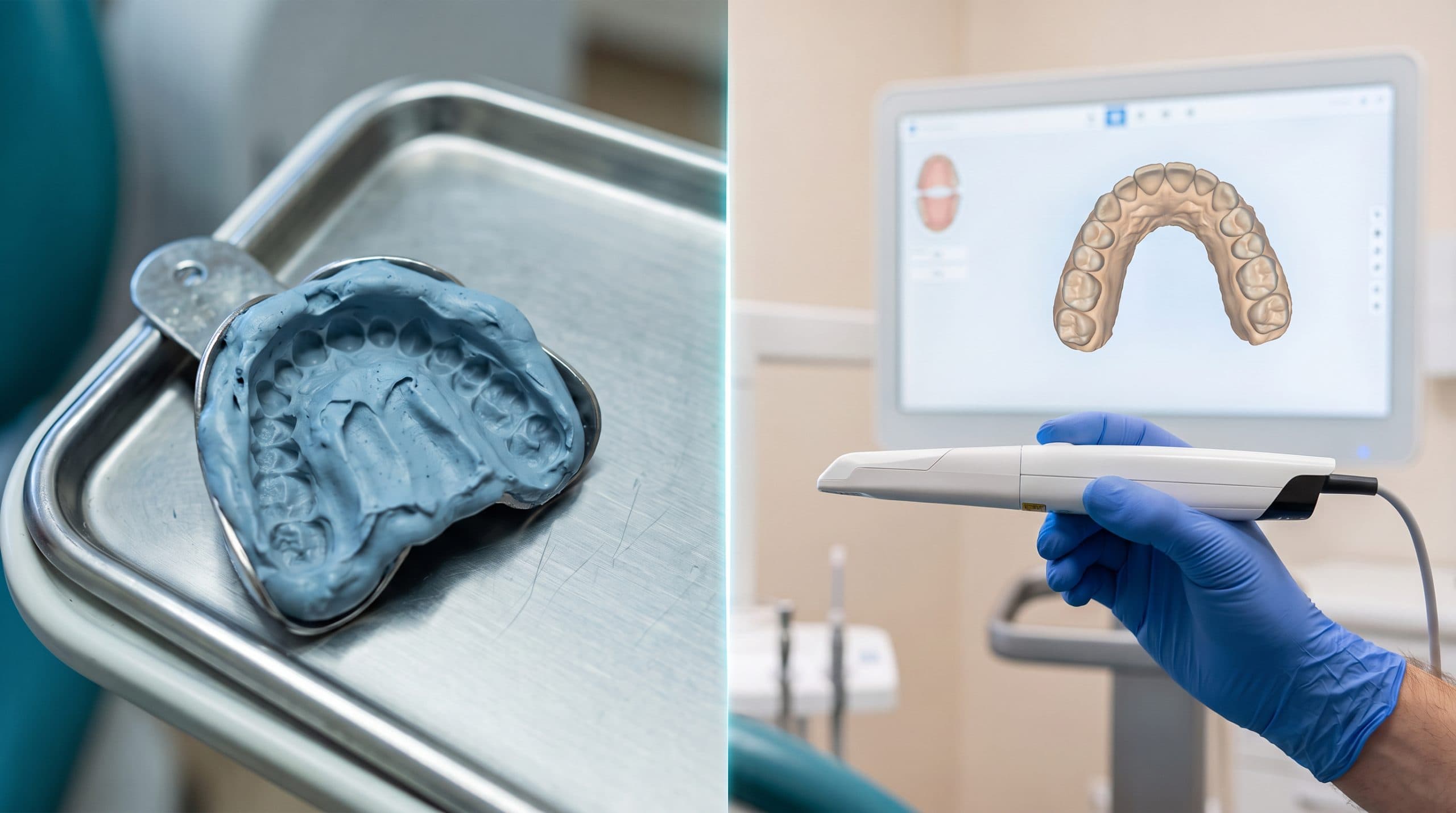
Digital dental impressions use an intraoral scanner to create a three-dimensional record, while traditional impressions use materials such as polyvinyl siloxane (PVS) or polyether. Both methods can support successful restorations. The appropriate choice depends on the restoration, margin visibility, tissue conditions, operator experience, and laboratory workflow. Digital capture offers rapid file transfer and on-screen review; conventional techniques remain useful when the case requires features that are difficult to record optically.
Key Takeaways
Digital and traditional dental impressions can both support successful restorative treatment when the records are complete and the technique is appropriate.
Digital workflows allow on-screen review and localized rescanning, but they do not eliminate capture errors or remakes.
Chair time and patient comfort vary with the equipment, operator, procedure, and patient.
Dentate full-arch scans, complete denture impressions, and full-arch implant records have different requirements and should be evaluated separately.
Clear margins, appropriate tissue management, and communication with the lab matter with either method.
An impression provides the records used to design and manufacture a restoration. Missing detail or distortion can affect the work that follows, regardless of how advanced the laboratory equipment is. Comparing digital vs traditional dental impressions therefore means looking beyond the scanner and tray. The useful questions are whether the method captures the information needed for the case, how easily the record can be checked, and how it fits the practice–lab workflow. Explore Dentallab.com’s crown and bridge options when discussing the restoration requirements with your lab.
How Digital and Traditional Dental Impressions Work
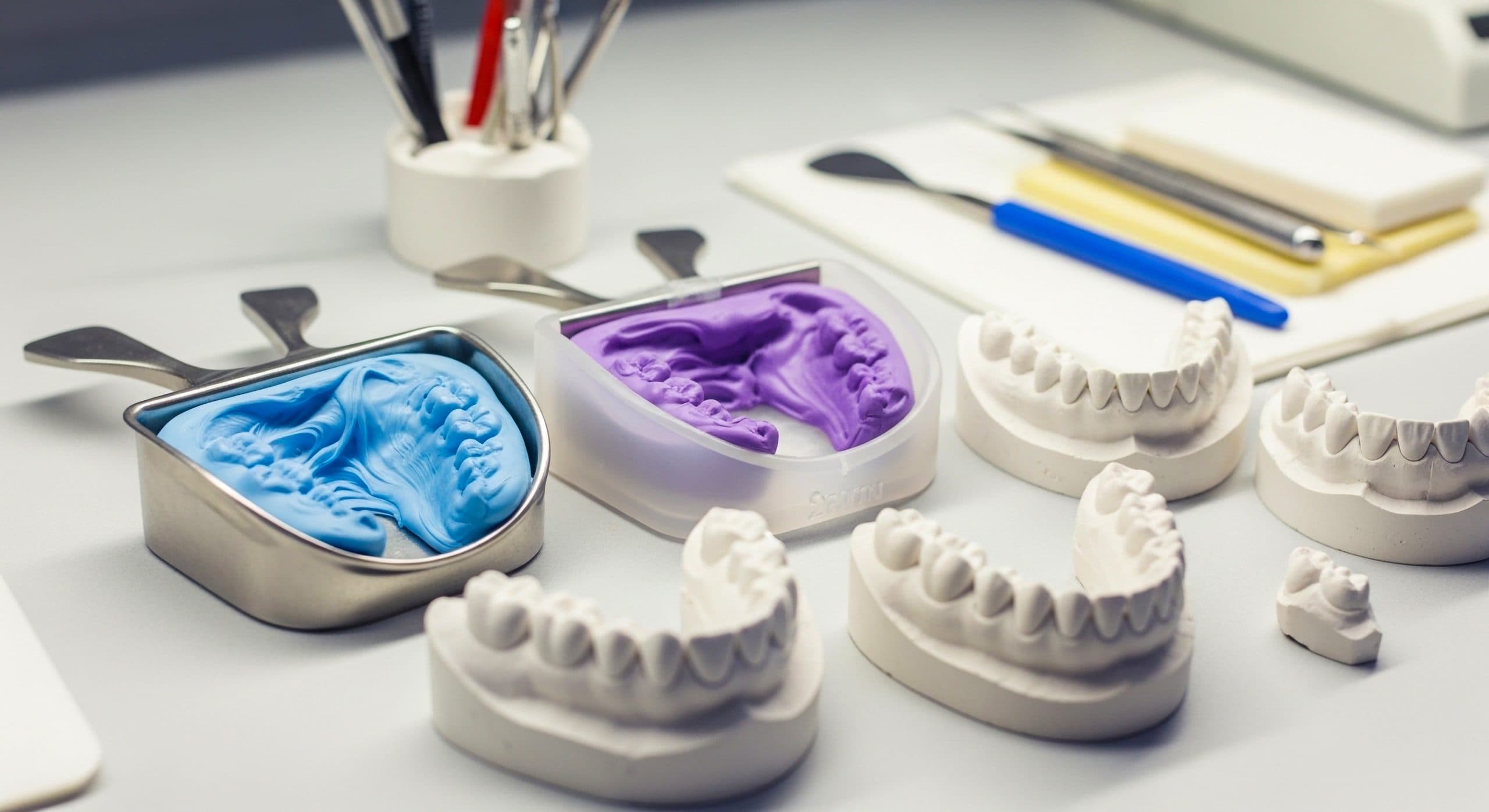
Traditional impressions record oral structures and can be used to produce physical dental models.
Traditional Impressions
Traditional impressions record oral structures in a material such as PVS or polyether. After setting, the impression is removed and inspected, then disinfected and handled according to the material manufacturer’s instructions before being sent to the lab. Depending on the restoration and laboratory process, the impression may be used to produce a stone model or digitized for further work. Tray selection, material handling, tissue management, and transport can all affect the quality of the final record.
Digital Impressions
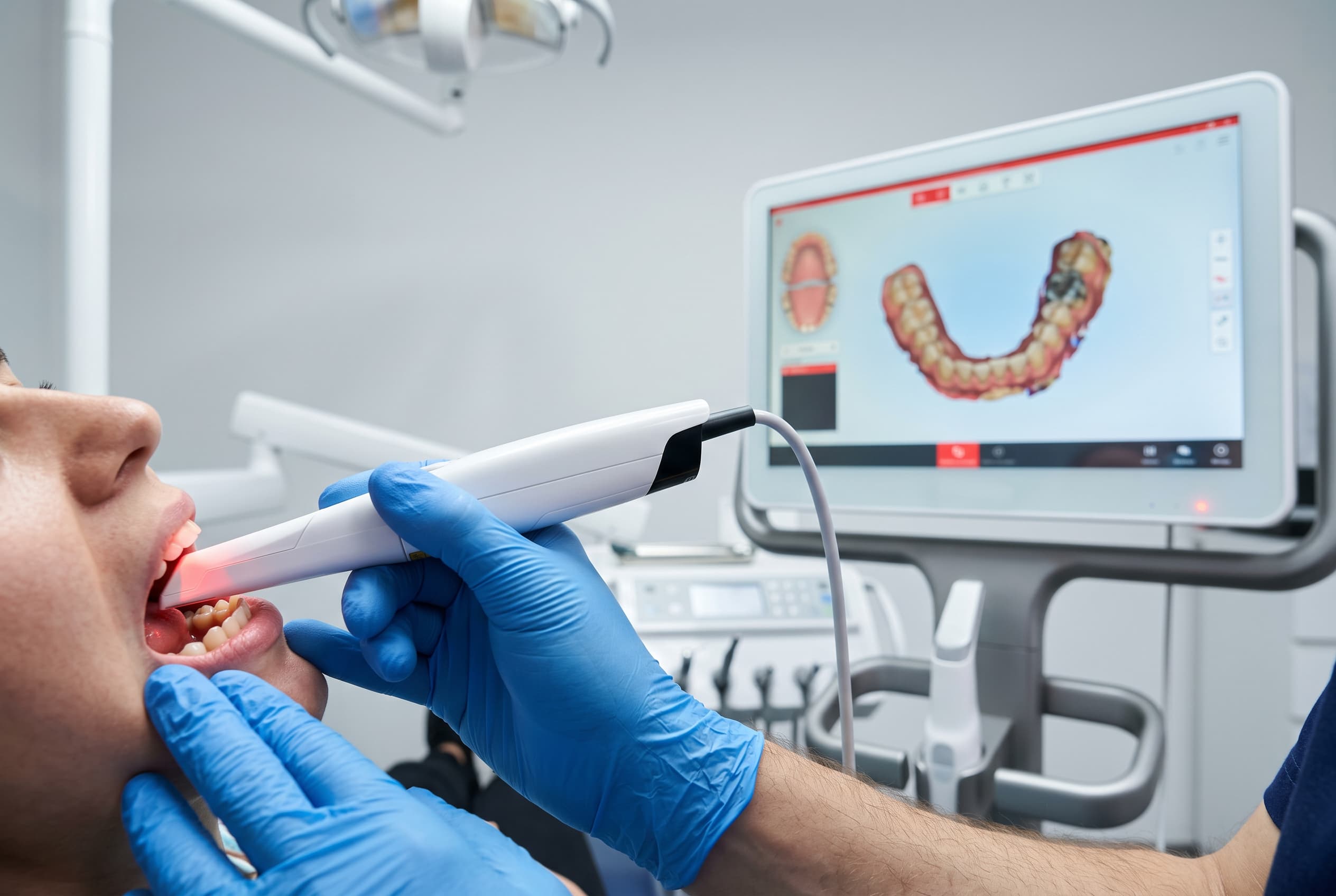
An intraoral scanner captures optical data and combines it into a three-dimensional model. The clinician can review the displayed record and, where appropriate, capture additional data from missing or unclear areas before submission. Files can be transferred electronically, avoiding the inbound shipment of a physical impression. However, digital capture still depends on visibility, moisture control, scanning technique, and the scanner’s capabilities. On-screen review helps assess the record but does not guarantee that every error will be detected.
Accuracy: Match the Impression Method to the Case
Single Crowns and Short-Span Restorations
Both digital and conventional impressions are used for single crowns and short-span restorations. Comparisons should consider the specific scanner, impression technique, restoration, and outcome being measured. The accuracy of the captured record and the fit of the finished restoration are related, but they are not the same measurement. Design, model production, manufacturing, and finishing can also influence the final result. A finding from one workflow should not be treated as proof that one impression method is always superior.
Full-Arch and Complete Denture Cases
“Full arch” includes different clinical situations. Scanning an arch with natural teeth, recording an edentulous arch for a complete denture, and capturing implant positions for a full-arch prosthesis are not interchangeable tasks. For complete dentures, recording the supporting tissues and functional borders is a particular challenge. In one clinical crossover study, conventional maxillary impressions that included border molding and posterior palatal seal compression produced denture bases with better retention than those made from intraoral scans. This finding applies to the procedure studied and should not be generalized to every full-arch restoration. Discuss the required records and verification steps with the lab before choosing a workflow for a complex case.
Digital vs Traditional Dental Impressions: Side-by-Side Comparison
Factor
Digital impressions
Traditional impressions
Record quality
Depends on scanner capability, visibility, scanning technique, and case complexity
Depends on material handling, tray selection, tissue management, and technique
Corrections
Localized areas can often be rescanned; more extensive recapture may sometimes be needed
Significant defects may require a new impression
Chairside review
The displayed model can be inspected before submission
The impression can be inspected after removal
Patient comfort
Avoids impression trays; tolerance varies with the patient and scanning procedure
Tray size, material, setting time, and gag sensitivity affect comfort
Transfer to the lab
Electronic file transfer avoids inbound physical shipment
Requires pickup or shipping; transit time varies
Full-arch applications
Suitability depends on the indication, equipment, and verification protocol
Remains useful for selected indications, including functional complete denture impressions
Costs
Equipment, training, maintenance, and applicable software or tip costs
Materials, trays, disinfection, and transport costs
Lab compatibility
File format and submission route must match the lab’s requirements
Material, packaging, and accompanying records must meet the lab’s requirements
Chair Time, Retakes and Patient Comfort
Digital scanning can make it easier to inspect a record and capture additional areas during the same appointment. Electronic transfer also removes the need to ship a physical impression to the lab. These are useful workflow features, but they do not establish a fixed time saving for every case.
Clinical results vary. One randomized trial of single-crown impression procedures found conventional impressions more time-efficient and found no difference in patient comfort. A separate trial involving a specific single-implant crown workflow found greater time efficiency with the digital approach and similar quality outcomes.
These findings support a case-specific comparison. Practices should assess their own capture time, repeat procedures, patient feedback, and lab clarification requests. Financial value also depends on case volume and total ownership costs; a scanner should not be described as paying for itself without a supporting calculation.
Follow the scanner manufacturer’s capture protocol.
Establish visibility and appropriate tissue and moisture control.
Review the preparation, adjacent areas, opposing record, and bite record as required for the case.
Capture missing or unclear areas before submitting the files.
Confirm the file format and transfer method accepted by the lab.
For Traditional Impressions
Before sending a physical impression, review Dentallab.com shipping and pickup options and include the required case documentation.
Select the tray and material appropriate for the procedure.
Follow the manufacturer’s instructions for handling, working time, setting, and disinfection.
Inspect the impression for missing detail, voids, tears, or other defects before submission.
Package the impression to protect it during transport.
Include the prescription and any additional records requested by the lab.
Deep subgingival margins can be challenging with either method. Tissue management, moisture control, and a clearly captured margin remain essential. Switching techniques does not remove the need to obtain an adequate clinical record.
Sending Your Case to Dentallab.com
An intraoral scanner captures a digital record that can be reviewed on screen before submission to the lab.
Dentallab.com provides submission routes for digital scans and traditional impressions. Review the case submission instructions for scanner connection details, required records, and physical case arrangements.
Before sending a complex case, confirm the preferred impression method and any additional records with the lab. The production process and turnaround depend on the restoration and the completeness of the submission.
Final Thoughts
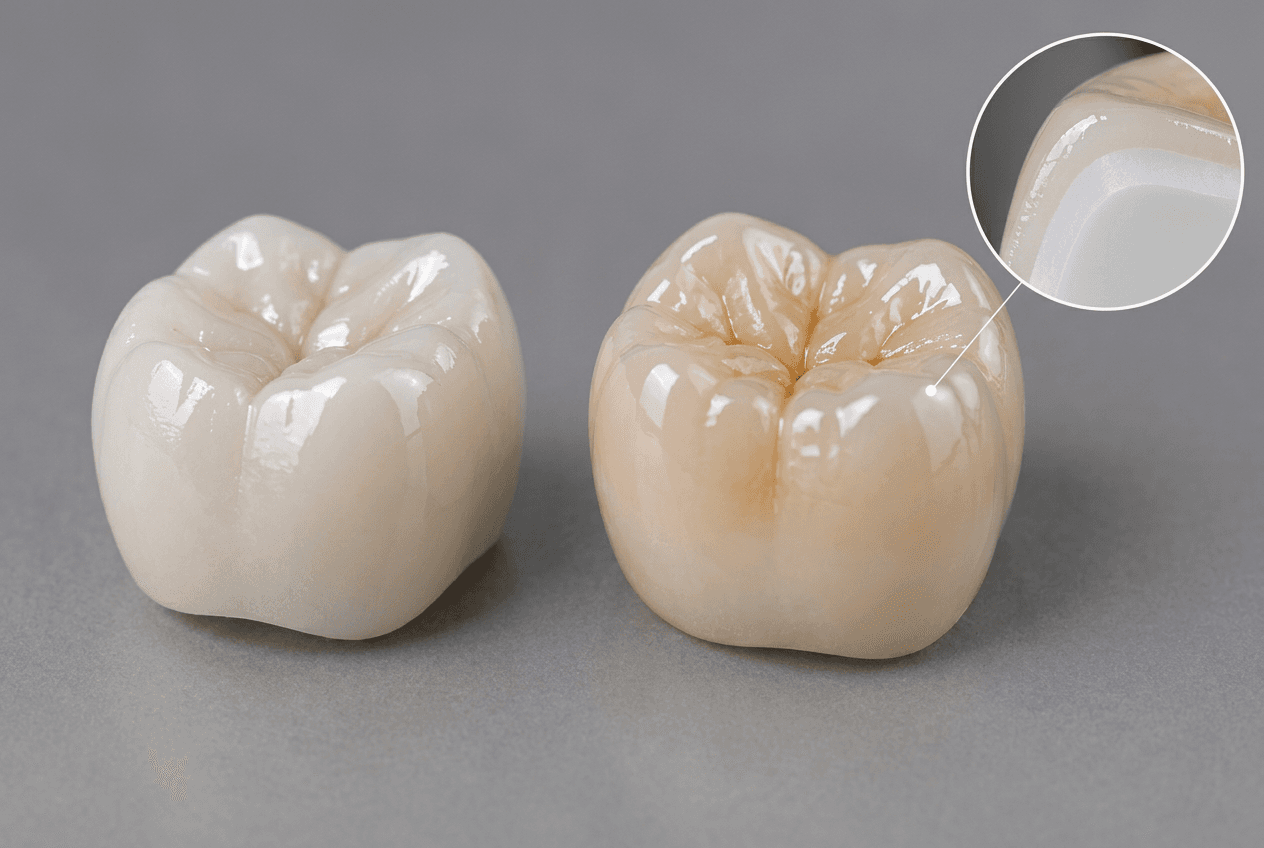
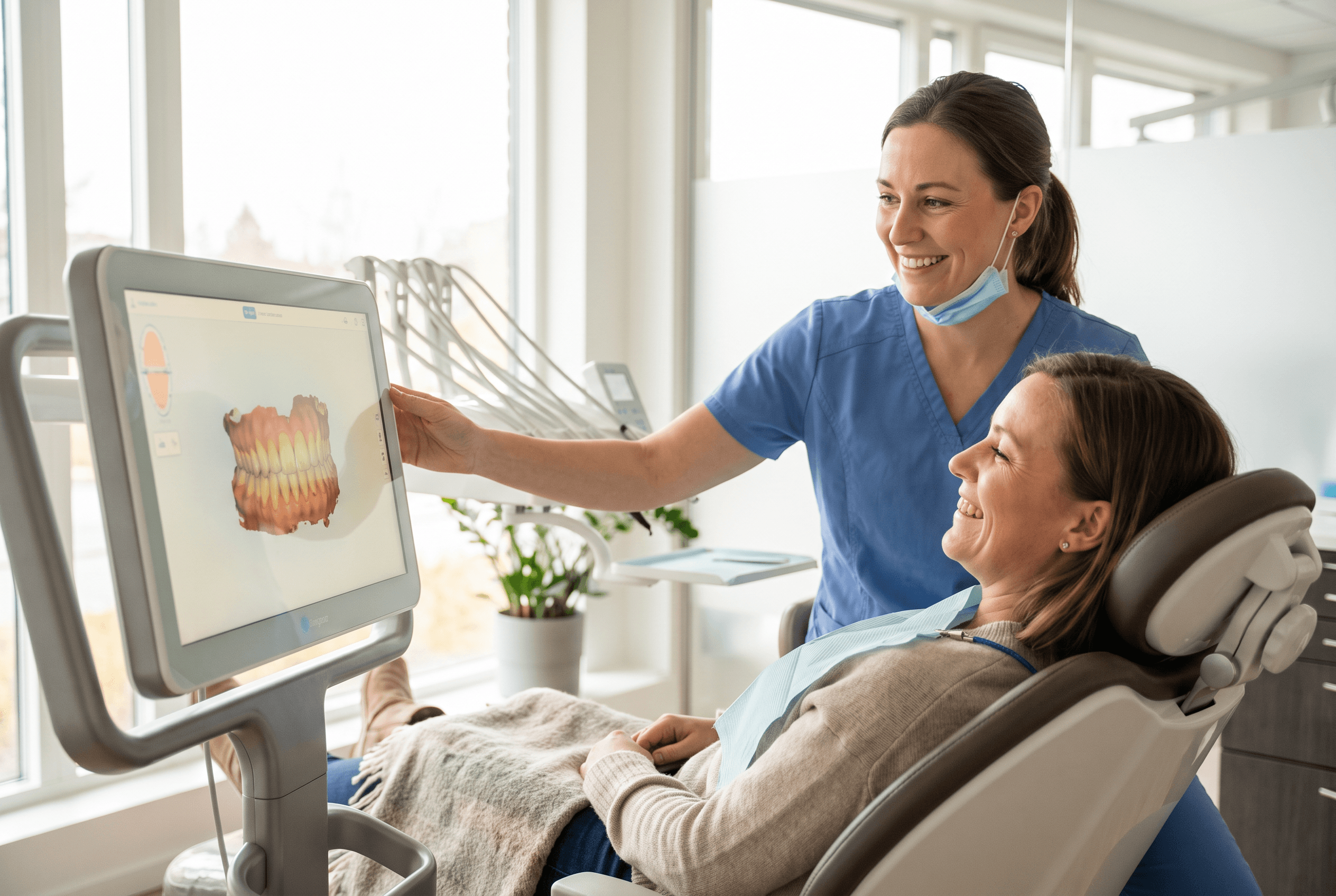
A digital dental model provides a visual aid for discussing the patient’s case.
Digital and traditional dental impressions are both tools for obtaining the records a restoration requires. Digital capture offers electronic transfer and opportunities for on-screen review, while conventional techniques remain useful for selected clinical situations. Choose the method that suits the case, verify the quality of the record, and communicate with the lab before production begins. A complete, usable impression matters more than choosing a technique based on a universal claim of superiority.
FAQs About Dental Impressions
Are digital impressions more accurate than traditional impressions? Neither method is universally more accurate for every procedure. Results depend on the case, equipment, technique, and outcome being measured. Both methods can provide useful records, while the fit of the finished restoration also depends on the subsequent design and manufacturing process.
Are digital impressions faster and more comfortable? They can be, but the benefit varies. Scanning avoids impression trays and allows on-screen review, while capture time depends on the operator, equipment, and case. Patient comfort also varies, and clinical studies have not shown the same result in every setting.
Do dental labs prefer digital or traditional impressions? Most modern labs prefer digital submissions because files arrive instantly, margins can be verified the same day, and there is no shipping or model pouring. However, full-service labs accept both, and many still recommend conventional impressions for complete denture cases.
When are traditional impressions still useful? Conventional techniques remain useful when the clinical situation calls for records that are difficult to capture optically. Complete denture procedures requiring functional border recording are one example. The appropriate approach should be selected for the specific restoration and tissue conditions.
Can digital impressions eliminate retakes and remakes? No. Localized rescanning can help correct some capture problems before submission, but digital records can still contain errors. Remakes may also result from factors beyond the impression, including design, manufacturing, or clinical changes.
Can a lab work from both digital and traditional impressions? Yes. Full-service digital labs accept intraoral scan files from all major scanners and also digitize shipped physical impressions on arrival. Both entry points feed the same CAD design and manufacturing pipeline, producing identical restoration quality.
Can Dentallab.com accept both digital and traditional impressions? Dentallab.com offers submission routes for both. Confirm the scanner connection or file requirements for a digital case, and the pickup, shipping, and documentation requirements for a physical impression.
Does a digital scan guarantee the same result as a traditional impression? No impression method guarantees an identical outcome. The completeness and quality of the records, the clinical requirements, and the subsequent laboratory process all influence the restoration.
Ready to Discuss Your Next Case?
Contact Dentallab.com to confirm the submission method and records needed for your restoration. Ask about the $150 first-case lab credit and any applicable offer terms.