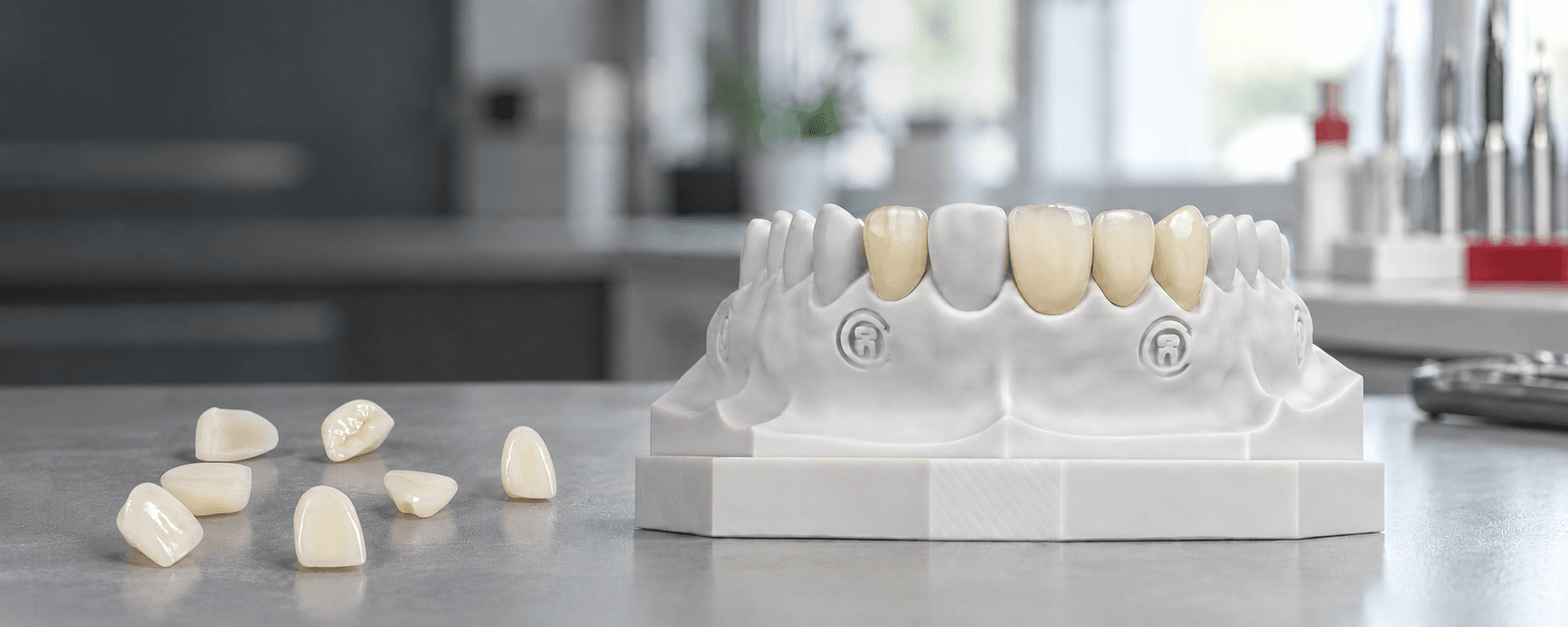
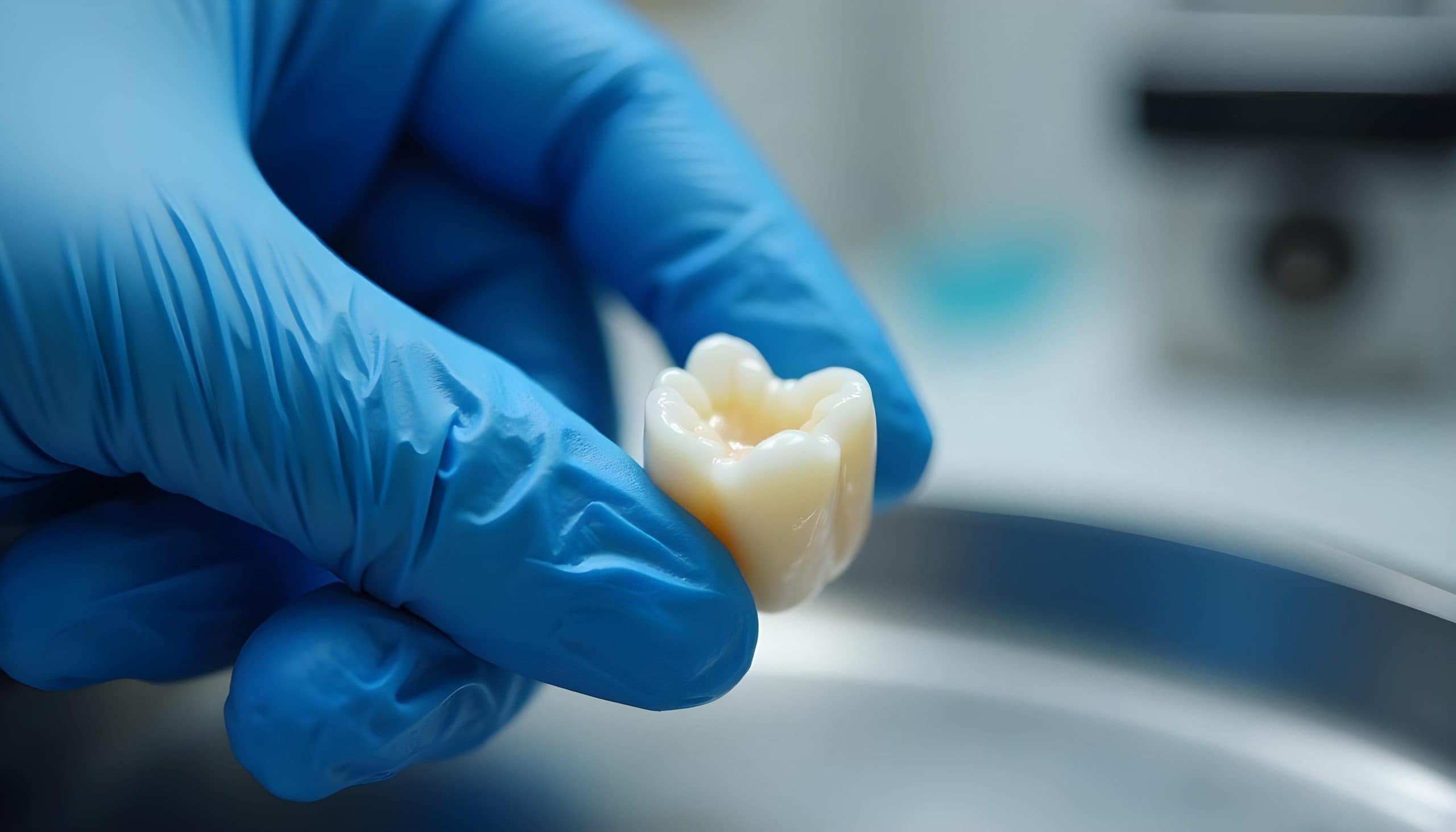
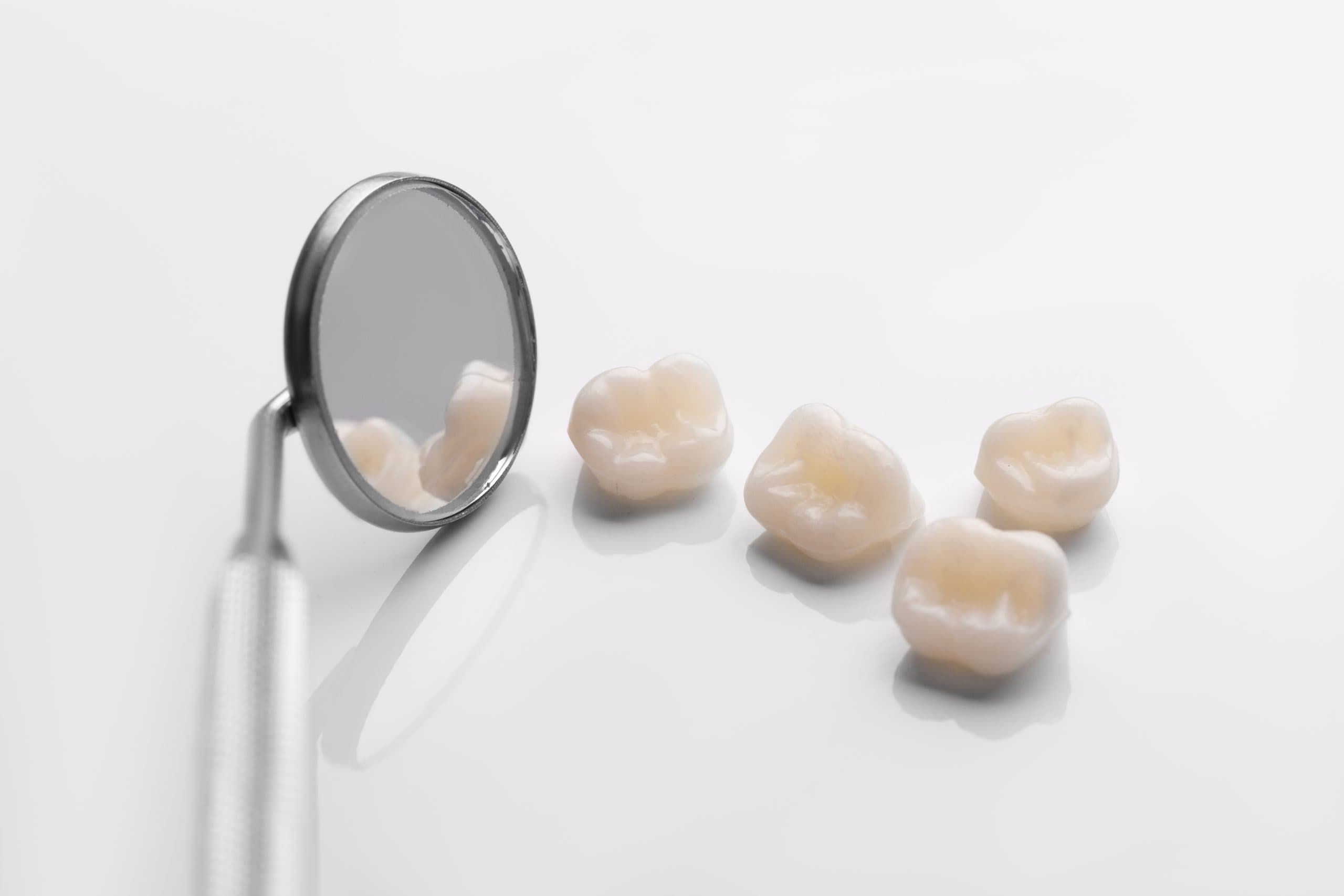
Dental crowns restore the shape, function, and appearance of teeth that need substantial structural protection. Common options include zirconia, lithium disilicate, porcelain-fused-to-metal, and full-metal restorations. Material selection depends on the remaining tooth structure, available space, occlusion, esthetic requirements, and the planned cementation approach. Crown longevity and laboratory fees vary by case; neither can be predicted from the material name alone.
Key Takeaways
No single crown material is the best choice for every tooth or patient.
Specify the material system and restoration design rather than prescribing “zirconia” or “ceramic” alone.
Preparation dimensions and minimum restoration thickness must follow the selected product’s instructions for use.
Crown fit depends on the clinical records, design, manufacturing, finishing, and seating process.
Long-term outcomes depend on biological and technical factors, including caries risk, remaining tooth structure, occlusion, and maintenance.
Compare lab quotations by what they include and the total workflow cost, not just the price per unit.
What to Confirm Before Prescribing a Crown
Whether full coverage is necessary or a more conservative restoration is appropriate.
The tooth’s restorability, remaining structure, periodontal condition, and endodontic status.
The selected material, available restorative space, and manufacturer’s preparation requirements.
Shade, underlying tooth or core color, and any esthetic reference photographs.
Required scan or impression records, delivery expectations, and the laboratory quotation.
A successful crown begins with a clinical decision about what the tooth needs. Material selection then connects that decision to preparation design, laboratory fabrication, and the final seating procedure. This guide is written for dental practices coordinating crown cases with a laboratory. It explains the main material categories, the information a lab needs, and the factors that influence fit, maintenance, and cost. It focuses primarily on single-unit crowns; bridges and full-arch prostheses require additional planning.
“Dentists blame mills. Labs blame margins. The evidence blames the chain.”
When Is a Dental Crown the Right Call?
The need for a dental crown is determined through clinical assessment of the tooth.
A crown may be appropriate when a tooth requires substantial protection or reconstruction because of extensive structural loss, a large existing restoration, or a clinically assessed fracture. The decision also depends on whether the tooth can be predictably restored and maintained.
Full coverage is not automatically necessary for every damaged or root-filled tooth. Depending on the remaining structure and clinical requirements, a direct restoration, onlay, or another partial-coverage design may be appropriate.
After root canal treatment, restoration selection depends on the tooth type, remaining tissue, and functional demands. Posterior teeth often require cuspal protection, while an anterior tooth with limited structural loss may be restored without a full crown. The dentist determines the treatment plan. The laboratory can advise on material and fabrication requirements, but a scan alone does not establish the clinical indication.
A metal crown has a visibly different appearance from the surrounding natural teeth.
Crown materials differ in optical properties, mechanical behavior, fabrication methods, and cementation requirements. Material selection should account for the complete restoration system and the clinical situation, rather than relying on a strength number or appearance alone.
Zirconia Crowns
Zirconia is a dental ceramic available in different compositions, translucencies, and multilayer formulations. A zirconia crown may be monolithic or may include veneering ceramic for characterization. Mechanical and optical properties vary between products. Higher translucency can involve changes in strength and toughness, but neither appearance nor clinical performance can be predicted from a generic “zirconia” label. Specify the exact product or formulation and follow its approved indications and minimum dimensions. Bruxism does not make any material fracture-proof. Occlusal design, available thickness, surface finishing, and patient-specific loading still require attention.
Lithium Disilicate Crowns
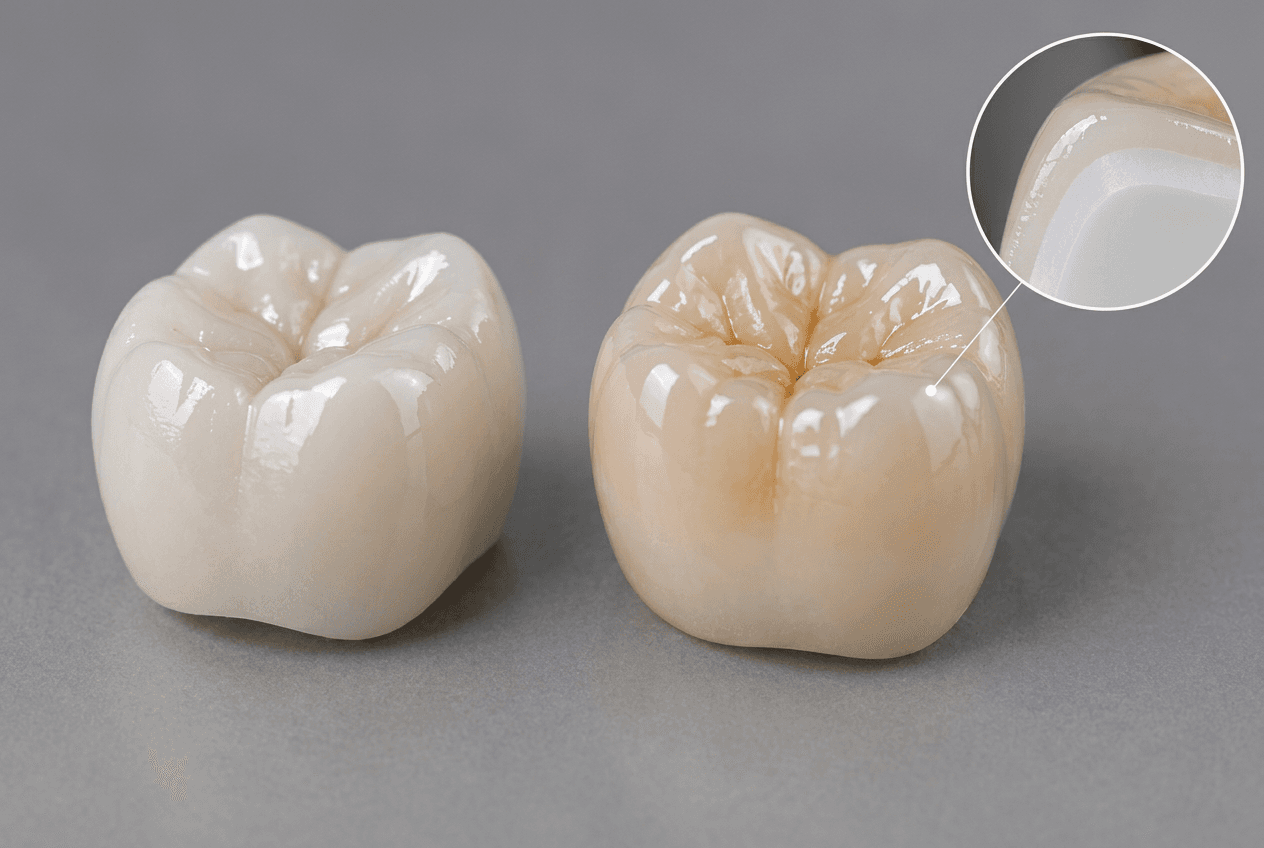
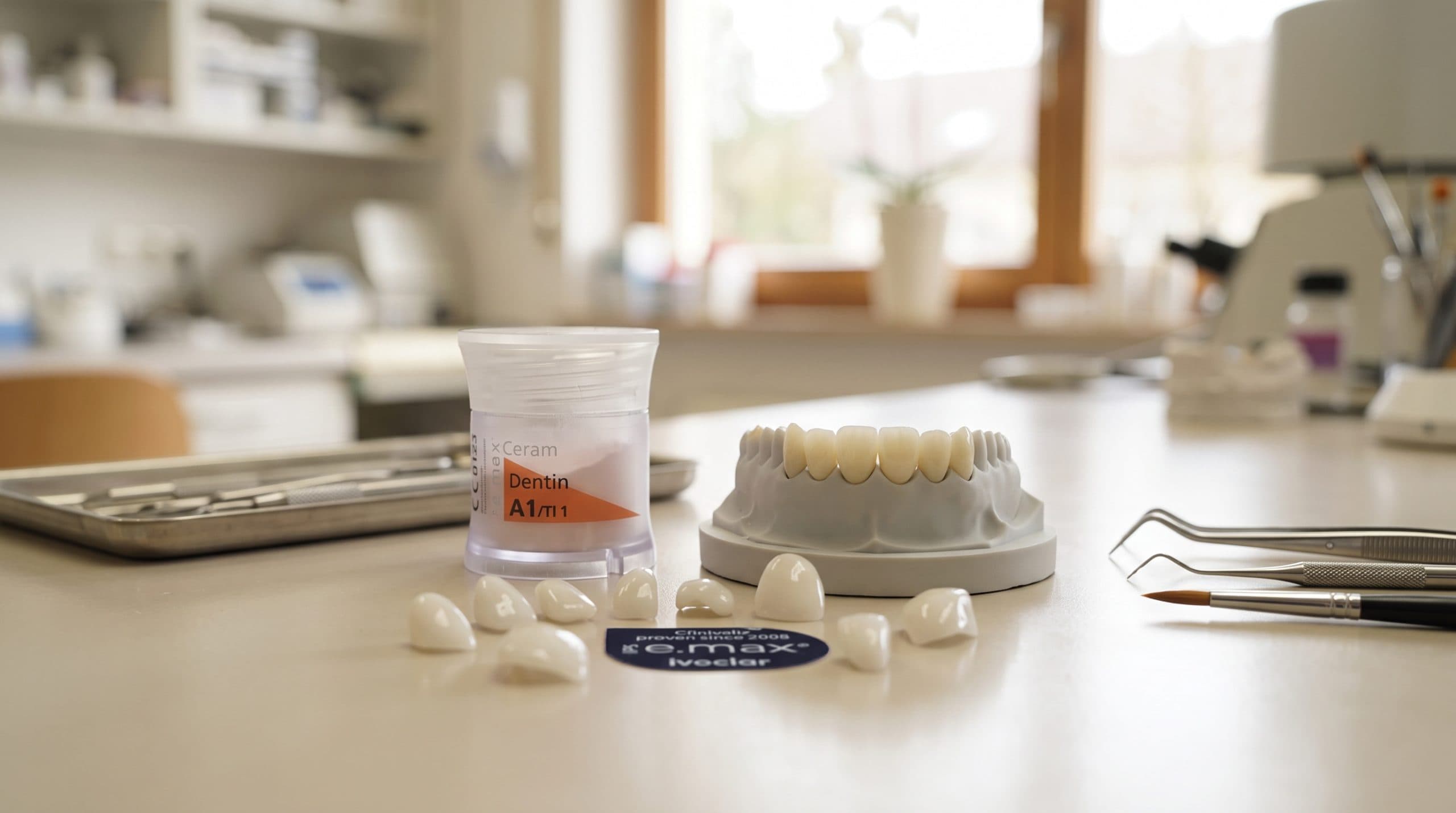
Lithium disilicate is a glass ceramic used for selected anterior and posterior restorations. Systems such as IPS e.max CAD and IPS e.max Press use different fabrication routes, and their processing instructions should be followed separately. Translucency and opacity options support different esthetic requirements. Preparation geometry, available thickness, underlying tooth color, and the selected cementation protocol all influence the result. Adhesive bonding should not be presented as a universal solution for an inadequate preparation.
Porcelain-Fused-to-Metal and Other Layered Crowns
Porcelain-fused-to-metal crowns combine a metal substructure with a ceramic veneer. Other layered restorations may use a ceramic framework beneath the veneering material. PFM remains an option for selected clinical situations. Esthetic limitations can include metal visibility or reduced translucency, while veneering ceramic can chip. The appropriate choice depends on the restoration requirements and patient preferences rather than whether the material is considered “modern” or “dated.”
Full-Metal Crowns
Full-metal crowns are made from dental alloys, including gold-containing alloys. They may be considered when their mechanical properties and preparation requirements suit the case and the patient accepts a metallic appearance. Performance depends on the alloy, restoration design, fit, and clinical conditions. Avoid promising a particular lifespan or describing every metal crown as having the same strength or wear behavior.
Stainless Steel Crowns in Pediatric Dentistry
Preformed stainless steel crowns are commonly used to restore selected primary teeth and can also have interim applications on permanent teeth. They are adapted and placed clinically rather than fabricated as an individual laboratory crown. On a primary tooth, a stainless steel crown may serve until the tooth naturally exfoliates. It should not be described simply as the same kind of temporary restoration used between adult crown appointments.
High-quality naturally three dental single crowns made of zirconium for fixation to the frontal teeth of upper jaw. Teeth treatment.
Resin-based crowns include provisional restorations and product-specific materials intended for definitive use. These categories should not be treated as interchangeable. For a printed restoration, confirm the material’s intended use and applicable regulatory status, along with the validated printer, cleaning, curing, finishing, and cementation workflow. Long-term evidence for one resin or production system should not be generalized to every printed crown.
Crown Materials Compared
Material
Useful characteristics
Important considerations
Zirconia
Multiple strength, translucency, and design options
Specify the formulation; verify thickness, finishing, and cementation requirements
Lithium disilicate
Optical options and adhesive applications for selected cases
Follow product-specific indications, preparation, and cementation instructions
Porcelain-fused-to-metal
Metal framework with ceramic characterization
Allow appropriate space; consider metal visibility and veneer chipping
Full-metal alloy
An option where metallic appearance is acceptable
Alloy properties, preparation requirements, and metal costs vary
Stainless steel
Preformed restoration for selected pediatric and interim applications
Different clinical role from a custom adult laboratory crown
Resin-based or printed materials
Provisional or definitive applications, depending on the product
Confirm intended use and the complete validated production workflow
Figure: Flexural strength by crown material. Zirconia’s advantage over porcelain crowns is why it dominates posterior and bruxism cases.
Flexural strength measured in a laboratory is not a direct prediction of crown survival. Published values depend on the product and test method, while clinical performance also depends on geometry, thickness, defects, loading, and the supporting tooth. Preparation reduction and minimum restoration thickness should be planned for the selected material and cementation approach. Use the current manufacturer’s instructions rather than a single generic millimeter range for an entire material category.
Material selection should combine the clinical examination with the requirements of the proposed restoration. The following considerations help structure the discussion with the laboratory:
Posterior loading: Evaluate occlusion, parafunction, available space, and the product’s approved indications.
Anterior esthetics: Communicate shade, translucency, surface texture, and the appearance of adjacent teeth.
Discolored teeth or cores: Provide an underlying shade photograph and discuss masking needs before selecting opacity and thickness.
Limited remaining structure: Assess retention, resistance, restorability, and the planned cementation approach before prescribing the crown.
Implant-supported crowns: Coordinate the restorative material, implant components, available space, and retention design with the implant system.
Patient priorities: Include appearance, maintenance, cost, and relevant material sensitivities in the discussion.
Review Dentallab.com’s crown and bridge options when discussing the available laboratory materials.
Temporary and Definitive Crowns
In a conventional two-appointment workflow, a provisional crown protects the prepared tooth and helps maintain contacts, function, and soft-tissue form while the definitive restoration is fabricated. Same-day workflows and complex treatment plans may follow different appointment schedules. Provisionals may be made using chairside, milled, or printed materials. Their retention and removal requirements differ from those of the definitive restoration. Patients should follow the treating dentist’s instructions for eating and cleaning around a provisional. If it loosens or comes off, they should contact the practice promptly for advice. Severe pain, swelling, or other concerning symptoms require urgent assessment. At the definitive appointment, the dentist evaluates the crown before cementation or bonding. The method is selected for the restorative material, preparation, and clinical conditions; not every crown uses the same adhesive protocol.
What Determines Crown Fit?
Crown fit depends on a sequence of clinical and laboratory steps. The preparation must provide suitable geometry and accessible, clearly recorded margins. Margin position is a clinical decision and should not be described as always being at the gum line. The lab needs a complete scan or impression, appropriate opposing and bite records, and a clear prescription. Design choices, margin identification, manufacturing accuracy, processing, and finishing can each influence the result. Laboratory checks support quality control, but they do not replace the dentist’s assessment of seating, margins, contacts, occlusion, and esthetics before final placement.
Dental Crown Lab Workflow: From Prescription to Delivery
Submission: Send the prescription, preparation record, opposing arch, bite record, and required shade information.
Case review: The lab checks the records and requests clarification when necessary.
Design: The restoration is designed within the clinical prescription and material requirements.
Fabrication: The lab uses the relevant milling, pressing, casting, or validated printing workflow.
Finishing and quality control: The crown is finished and checked against the available records and prescription.
Delivery and clinical evaluation: The restoration is shipped, then assessed by the dentist before final placement.
Confirm the expected delivery date after case acceptance, including any approval requirements and shipping time. See Dentallab.com’s case submission instructions for the available submission routes.
How Long Do Dental Crowns Last?
Dental crowns can remain in service for many years, but there is no single lifespan or survival percentage that applies to every material and patient. Results vary with study population, restoration design, clinical technique, maintenance, and the definition of failure.
Survival is also different from complication-free success. A crown may remain in place after an intervention, while another may require replacement because of biological or technical problems.
Potential complications include recurrent caries, loss of retention, ceramic chipping or fracture, tooth or root fracture, periodontal problems, and endodontic complications. Material-related failures should not be dismissed as rare across all crown systems.
For example, one retrospective case series of posterior lithium disilicate crowns reported estimated survival of 85.5% at 10 years. That result describes the study’s particular group and is not a forecast for an individual crown.
A crown does not remove the risk of decay in the supporting tooth or disease in the surrounding tissues. Brush twice daily with fluoride toothpaste, clean between the teeth daily, and attend dental reviews at intervals appropriate to the patient’s risk. Report a loose crown, persistent discomfort, a change in the bite, or visible damage to the dental practice. Early assessment can help identify whether maintenance, repair, or replacement is needed. For patients with bruxism, the dentist may recommend an occlusal appliance as part of management. An appliance does not guarantee that crown fracture or other complications will be prevented.
Laboratory fees vary by material, restoration design, characterization, components, production requirements, and service arrangements. A quotation should specify the currency and what is included, especially when comparing laboratories across countries. Ask whether the fee includes models, implant components, shipping, rush service, and any applicable remake or warranty provisions. Precious-metal restorations may also involve variable alloy charges. The laboratory fee is different from the patient’s treatment fee. Clinical assessment, preparation, previsualization, seating, and follow-up contribute to the practice’s overall costs. Compare the total workflow cost as well as the quoted unit price. Adjustment time and remakes can affect efficiency, but their frequency and financial impact should be measured rather than assumed.
Effective collaboration starts with a complete prescription and usable clinical records. The laboratory can identify missing information, discuss material options, and raise fabrication concerns before production. For esthetic or complex cases, agree on the photographs, reference records, and approval steps needed. Ask whether a design preview is available and what it is intended to show. A preview can support communication, but it does not guarantee clinical fit or replace final evaluation. Confirm the lab’s turnaround, revision, remake, and warranty policies before submitting the case.
Final Thoughts
Successful dental crowns depend on appropriate case selection, a suitable material system, complete clinical records, and careful execution from preparation to placement. Specify the restoration clearly, follow product-specific requirements, and communicate uncertainties before fabrication. Long-term outcomes also depend on the supporting tooth, patient risk factors, and ongoing care.
FAQs About Dental Crowns
1. What are dental crowns used for?
Dental crowns restore the form and function of teeth that need substantial reconstruction or protection. A separate implant-supported crown can replace the visible part of a missing tooth. The appropriate treatment depends on the clinical assessment.
2. What are the main types of dental crowns?
Common categories include all-ceramic crowns, porcelain-fused-to-metal crowns, and full-metal crowns. Preformed stainless steel crowns and resin-based restorations have additional uses. These categories are not a universal three-type classification.
3. What materials are dental crowns made from?
Dental crowns are made from zirconia (zirconium dioxide), lithium disilicate, porcelain, porcelain over a metal alloy, gold, and stainless steel. Newer 3D-printed crowns and all-resin crowns serve mostly as temporary crowns. Material choice depends on the tooth’s position, load, and esthetic demands.
4. Which crown material is best?
There is no single best material for every case. Selection depends on the tooth, remaining structure, available space, occlusion, esthetic needs, and product-specific requirements.
5. How much tooth reduction does a crown require?
The required preparation depends on the selected material, restoration design, tooth anatomy, and cementation plan. Use the manufacturer’s current instructions and clinical assessment rather than a generic thickness range for all crowns.
6. How long do dental crowns last?
Many crowns remain functional for years, but lifespan varies. Study survival rates describe particular groups and cannot guarantee an individual result. Biological and technical complications both affect longevity.
7. How can I care for my dental crown to extend its lifespan?
Care for a crown like a natural tooth: brush twice daily, use dental floss around it, and keep regular dental care visits, paying attention to the gum line where recurrent caries begins. A night guard protects against crown fracture in patients who grind their teeth.
8. What complications can occur with a crown?
Possible complications include sensitivity, recurrent decay, loss of retention, chipping or fracture, gum problems, and problems involving the supporting tooth. Careful treatment and maintenance can reduce risk but cannot eliminate it.
9. What should a patient do if a temporary crown comes off?
Contact the dental practice promptly for instructions and protect the prepared tooth from unnecessary loading. Severe pain, swelling, or other concerning symptoms require urgent assessment.
10. Why are dental crowns so expensive?
A crown is a custom dental restoration, not an off-the-shelf part. The cost reflects the dentist’s preparation and fitting time, the dental laboratory’s design and hand-finishing, premium materials like zirconia or lithium disilicate, and lab equipment. Dental insurance often offsets part of the dental crown cost.
11. What are the best dental crowns?
There is no single best crown; the best material depends on the tooth. Zirconia leads for molars, bruxers, and implant crowns thanks to its strength. Lithium disilicate and veneered zirconia lead for front-tooth esthetics. Porcelain-fused-to-metal and gold crowns still suit some selective cases.
12. How much does a dental crown cost from the lab?
In the US and Canada, practices typically pay $99 to $180 per unit for monolithic zirconia, $120 to $200 for e.max, and $110 to $200 for layered or PFM work. Implant crowns with custom abutments run $200 to $450, including componentry. Dentallab.com prices are below the typical zirconia range, which a fully digital workflow makes possible.
13. Does every root-filled tooth need a crown?
No. Restoration choice depends on the tooth type, remaining structure, and functional requirements. Posterior teeth often need cuspal protection, while some anterior teeth with limited structural loss can be restored without full coverage.
14. Does a tooth need root canal treatment before receiving a crown?
No. Root canal treatment is performed when indicated by the tooth’s pulpal or periapical condition, not simply because a crown is planned. The dentist assesses the need separately.