An adolescent patient presents with a congenitally missing maxillary lateral incisor. The adjacent teeth are healthy, implant placement may need to be delayed until skeletal growth is complete, and preserving enamel is a priority.
For the treating dentist, a Maryland bridge may offer a conservative fixed restorative solution.
Yet the decision is not as simple as choosing a ceramic pontic and bonding a wing to the neighboring tooth. Retainer configuration, enamel availability, occlusal clearance, framework material, and adhesive technique all influence the clinical outcome.
Modern Maryland bridges have evolved from earlier metal-wing restorations into a broader category of resin-bonded fixed dental prostheses. Advances in adhesive dentistry and single-retainer designs have expanded their potential, particularly in selected anterior cases.
This guide examines where Maryland bridges fit into contemporary restorative treatment, how to plan preparation and bonding, what published research tells us about longevity, and the information a dental laboratory needs to fabricate them.
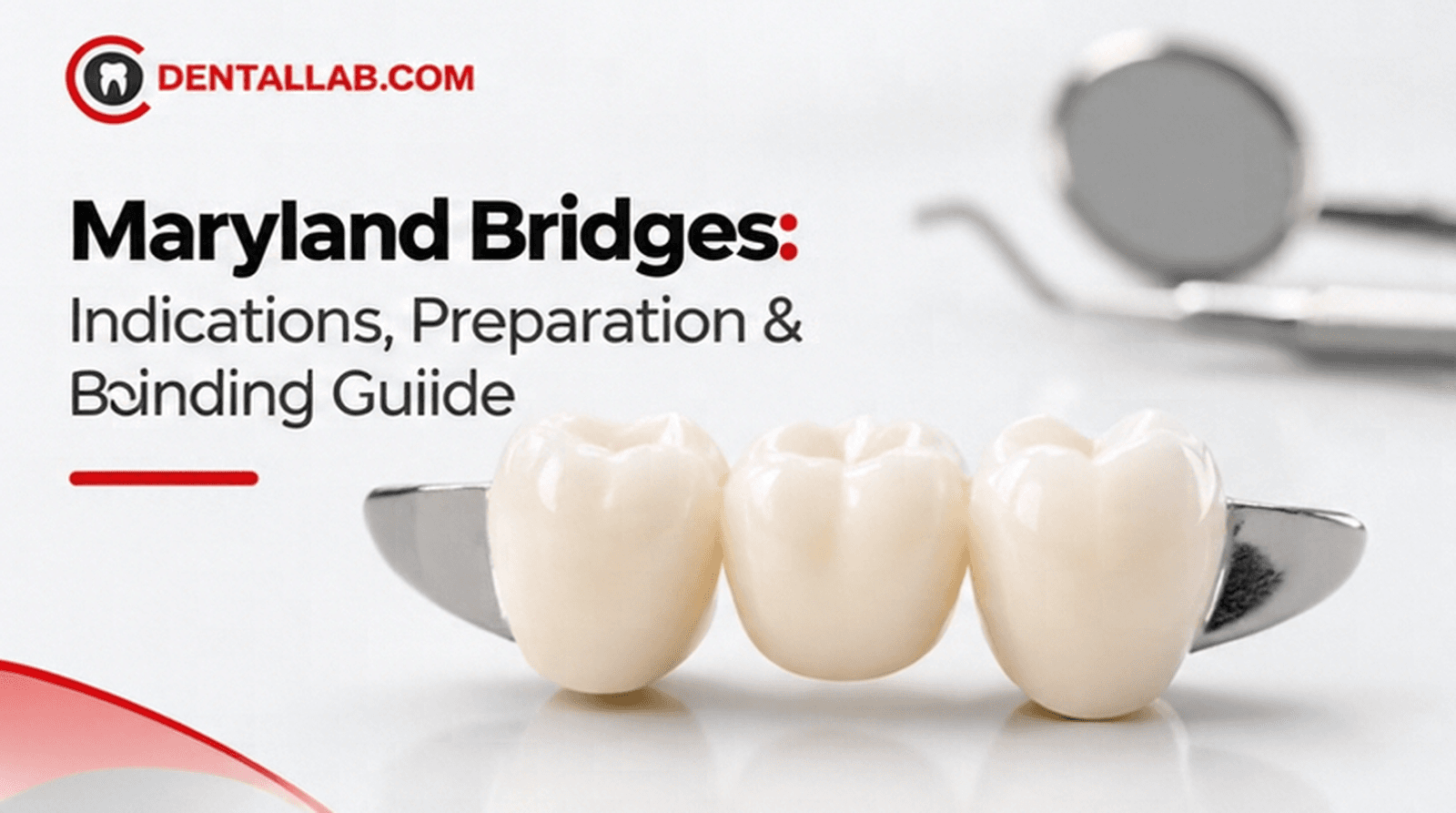
Maryland bridges are resin-bonded fixed restorations that replace a missing tooth with a pontic supported by one or more retainers bonded to adjacent teeth.
Unlike conventional fixed bridges, they generally require minimal preparation of the supporting teeth.
The primary advantage is tooth conservation. A Maryland bridge may provide fixed tooth replacement without the extensive enamel and dentin removal associated with full-coverage retainers.
However, treatment suitability depends on the supporting teeth, bonding substrate, restoration location, and functional requirements.
Missing Maxillary Lateral Incisors
Congenitally missing maxillary lateral incisors are among the most common indications for resin-bonded anterior restorations.
When the neighboring teeth are intact, a Maryland bridge may preserve healthy tooth structure while restoring appearance and function.
Available restorative space, canine guidance, overbite, and abutment morphology must be evaluated before selecting the retainer design.
Young Patients Awaiting Implant Treatment
Implant placement may need to be delayed in adolescents and young adults until craniofacial growth has stabilized.
A resin-bonded bridge can provide a fixed replacement during this period while helping maintain the appearance of the edentulous space.
Depending on treatment planning, the restoration may be used as an interim or longer-term solution.
Patients Seeking Conservative Treatment
Maryland bridges may also be considered when patients prefer to avoid implant surgery or extensive preparation of adjacent teeth.
The restoration should still be evaluated against other treatment options, including conventional fixed bridges, implant-supported restorations, and removable prostheses.
When a Maryland Bridge May Be Less Suitable
Clinical limitations include inadequate enamel for bonding, heavily restored abutment teeth, unfavorable occlusion, insufficient restorative clearance, and poor periodontal support.
Patients with significant parafunctional loading may require particular caution.
Posterior Maryland bridges should not automatically be excluded, but their mechanical demands and clinical evidence differ from anterior applications.
Single-Wing vs Two-Wing Maryland Bridges
One of the most important developments in resin-bonded bridge design has been the use of single-retainer configurations.
Traditional Maryland bridges frequently used two retainers bonded to the teeth bordering the missing space.
Although this provided two bonding surfaces, it also connected teeth that could move independently during function.
Single-Retainer Maryland Bridge
A single-retainer design bonds to one supporting tooth, allowing the pontic to follow the movement of that abutment.
This avoids some of the differential movement associated with rigidly joining two natural teeth.
For selected anterior cases, single-retainer designs may offer favorable mechanical and maintenance characteristics.
Two-Retainer Maryland Bridge
Two-retainer bridges distribute support across adjacent teeth but introduce additional adhesive interfaces.
A complication can occur when one retainer debonds while the other remains attached, potentially making the failure less obvious.
However, two-retainer designs are not automatically inappropriate. Clinical circumstances and material selection influence the decision.
The study does not establish universal superiority for every material, restoration location, or patient.
Retainer selection should therefore be based on the clinical indication rather than a fixed rule that one wing is always better than two.
Maryland Bridge Preparation Guidelines
Lingual retainer preparation and bonding surface considerations for Maryland bridge restorations.
Successful preparation balances conservation of tooth structure with adequate bonding area, resistance form, and restorative clearance.
Some Maryland bridges may be fabricated with little or no tooth reduction, but preparation requirements depend on the selected framework material and clinical design.
Preserve Sound Enamel
Enamel provides an important substrate for adhesive retention.
Preparation should preserve as much sound enamel as possible while accommodating the required retainer geometry.
Reducing tooth structure beyond what the restoration requires may unnecessarily compromise the conservative advantage of resin-bonded treatment.
Evaluate Retainer Coverage
Retainer extension should provide sufficient bonding surface without interfering with the patient’s occlusion.
The design may incorporate appropriate lingual or palatal coverage, depending on abutment anatomy and the intended framework.
Consider Resistance Features
Selected preparations may benefit from a cingulum rest, proximal groove, guide plane, or other resistance features.
These elements should not be treated as universal requirements.
The preparation design must reflect the framework material, available enamel, path of insertion, and clinical loading conditions.
Confirm Connector and Retainer Dimensions
The connector between the pontic and retainer must provide adequate mechanical support.
Connector thickness and cross-sectional requirements vary by material system.
Dentists should avoid applying a single universal dimension to all zirconia, metal, or composite resin-bonded restorations.
7 Essential Maryland Bridge Preparation and Bonding Tips
The following practical considerations can help reduce uncertainty during Maryland bridge treatment.
Select the right abutment. Evaluate periodontal support, existing restorations, enamel quality, and tooth mobility before planning the retainer.
Preserve the bonding substrate. Maintain sound enamel whenever possible and avoid unnecessary preparation.
Check occlusion early. Assess both static contacts and excursive movements before selecting the restoration design.
Respect material limitations. Retainer thickness, connector geometry, and framework indications should follow the selected material’s technical requirements.
Plan the pontic contour. Consider emergence profile, tissue contact, cleansability, and esthetic integration.
Maintain adhesive isolation. Moisture control, correct surface conditioning, and compatible bonding materials are critical to retention.
Verify the restoration before final bonding. Evaluate fit, seating, retainer coverage, pontic position, and occlusal contacts before cementation.
These steps provide a clinical planning framework rather than a universal preparation or cementation protocol.
Zirconia Maryland Bridge Bonding Protocol
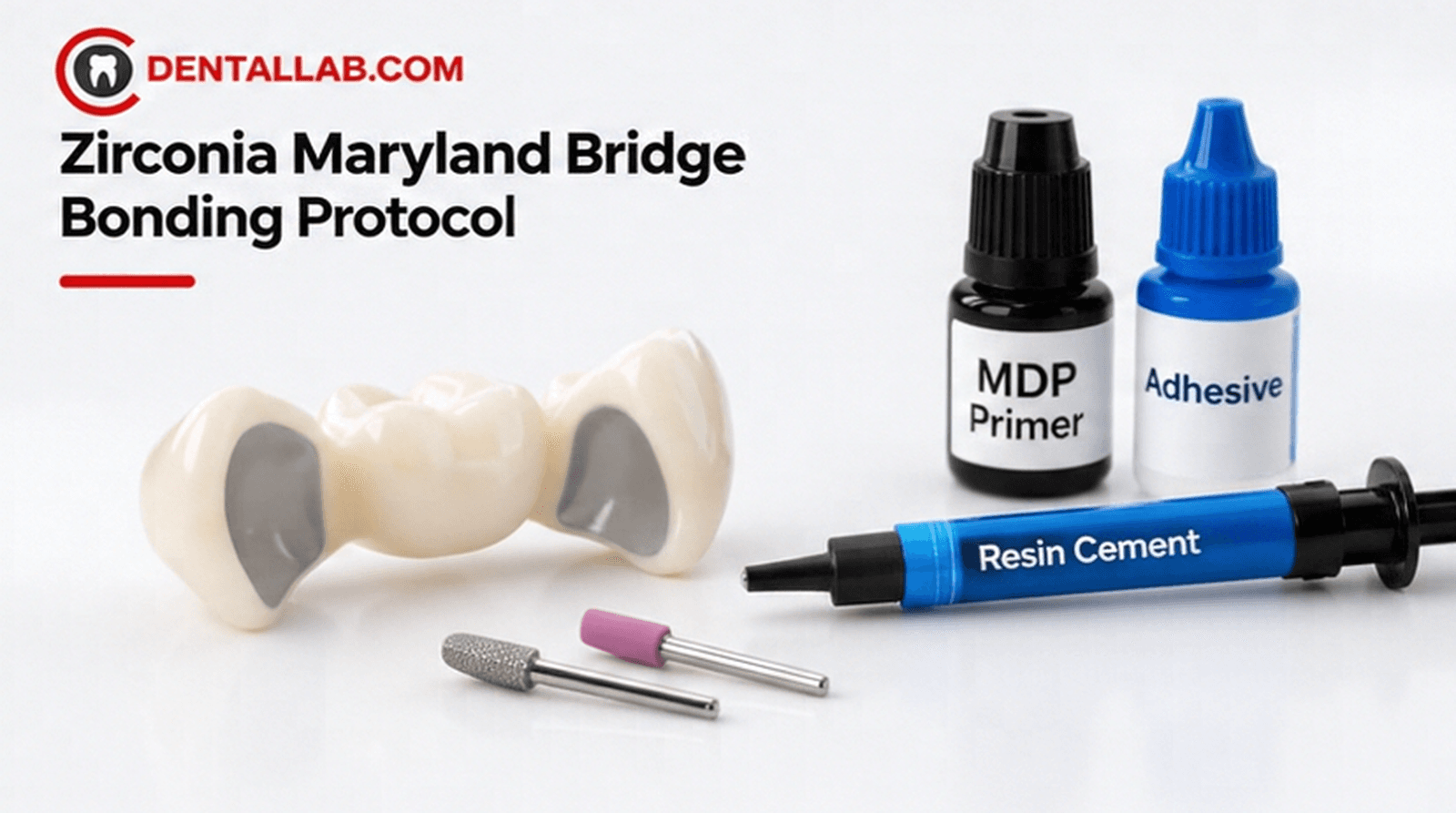
Adhesive materials and surface treatment considerations for zirconia Maryland bridge bonding.
Zirconia bonding differs from bonding to conventional silica-based glass ceramics.
Its polycrystalline structure means that traditional hydrofluoric-acid etching does not provide the same bonding mechanism used with etchable glass ceramics.
Reliable bonding requires surface conditioning and an adhesive system compatible with zirconia.
Airborne-Particle Abrasion
Controlled airborne-particle abrasion may be used to create micromechanical retention on the zirconia bonding surface.
The abrasive type, pressure, particle size, and treatment duration should follow the manufacturer’s instructions.
Excessive surface treatment may affect restoration integrity.
MDP-Based Adhesion
Adhesive systems containing 10-MDP can promote chemical interaction with zirconia.
The specific protocol should remain compatible with the restoration material, primer, adhesive, and resin cement.
Enamel Conditioning and Moisture Control
The supporting tooth must be prepared and conditioned according to the selected adhesive system.
Strict isolation is essential because contamination can compromise the adhesive interface.
After seating, clinicians should verify restoration adaptation, remove cement remnants appropriately, and assess functional contacts.
Maryland Bridge Materials: Metal, Zirconia and Composite
Material selection affects retainer thickness, esthetics, bonding requirements, and mechanical performance.
Metal Frameworks
Metal-wing Maryland bridges remain relevant for selected restorative situations.
They can provide relatively thin retainer frameworks, although metal display or discoloration may affect anterior esthetics.
The chosen alloy and surface treatment determine the appropriate bonding protocol.
Zirconia Frameworks
Selected zirconia systems offer metal-free esthetics and favorable mechanical properties.
However, not every zirconia formulation is suitable for every resin-bonded bridge design.
The selected material must support the intended retainer configuration, connector geometry, and restorative indication.
Composite and Other Materials
Composite-based resin-bonded restorations may be appropriate for certain clinical situations, including selected interim applications.
Dentallab’s fixed restoration portfolio includes Maryland bridge options within its broader selection of restorative products.
Material availability, preparation requirements, and laboratory specifications should be confirmed before finalizing the prescription.
How Long Do Maryland Bridges Last?
Maryland bridge longevity varies according to restoration design, material, adhesive technique, occlusal loading, and patient-related factors.
Importantly, survival and success are not identical clinical outcomes.
A restoration may remain functional after a complication such as debonding and rebonding, while stricter definitions of success may count the complication as a failure.
A 2017 systematic review involving 2,300 resin-bonded bridges estimated overall survival at 91.4% after five years and 82.9% after ten years.
These estimates represent pooled study populations, not a guarantee for any specific modern zirconia or single-retainer design.
Common Causes of Maryland Bridge Failure
The most frequent complications include loss of retention, connector fracture, ceramic chipping, and biological problems affecting the abutment.
Contributing factors may include:
Inadequate bonding surface or compromised enamel.
Contamination during adhesive procedures.
Inappropriate retainer or connector design.
Excessive functional loading.
Material-specific processing or surface-treatment problems.
Undetected partial debonding.
Poor maintenance or changes in abutment condition.
When a bridge debonds, the supporting tooth and restoration should be examined before deciding whether rebonding or replacement is appropriate.
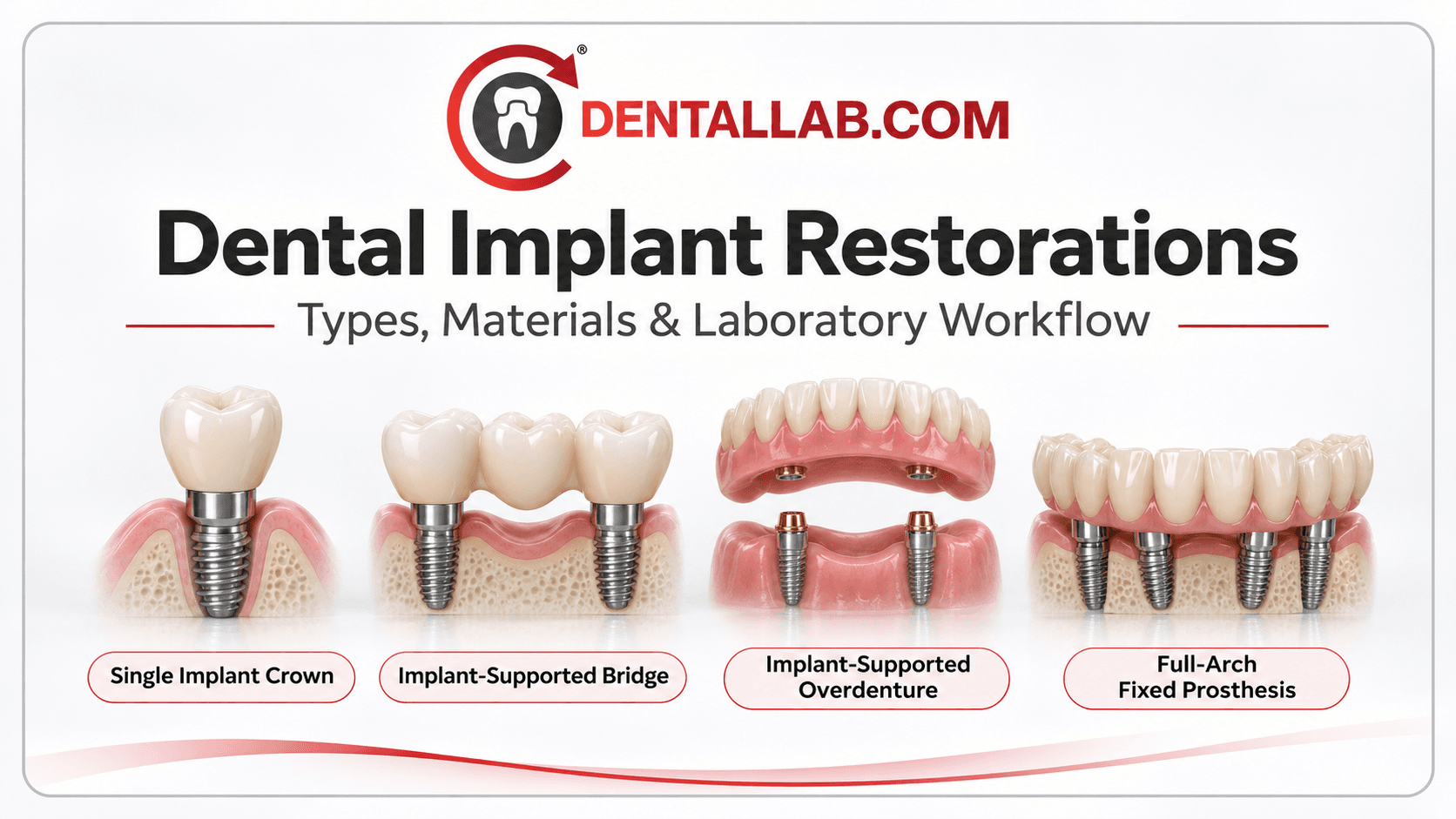
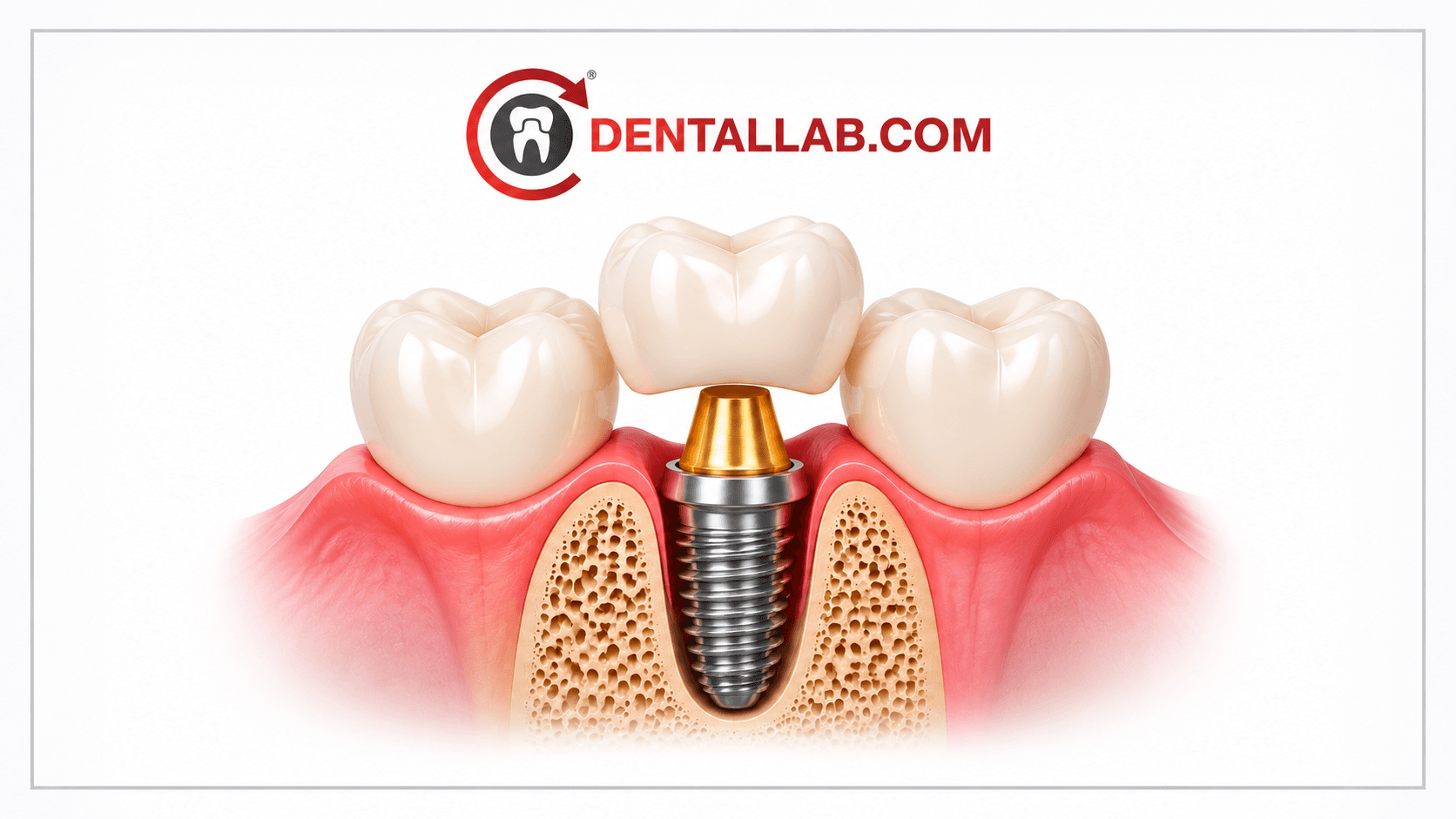
Maryland Bridge vs Dental Implant
Maryland bridges and dental implants may both be considered for single-tooth replacement, particularly in the anterior region.
The decision depends on the patient rather than a universal preference for either treatment.
Clinical consideration
Maryland bridge
Implant-supported crown
Adjacent tooth preparation
Usually minimal
Generally not required
Surgical procedure
Not required for the bridge itself
Implant surgery required
Skeletal growth
Can be considered while growth continues
Often delayed until growth stabilizes
Primary support
Bonded natural tooth or teeth
Dental implant
Maintenance concerns
Debonding, framework complications, abutment health
Peri-implant health, prosthetic complications
Treatment planning
Adhesive and occlusal evaluation
Surgical, anatomical, and prosthetic evaluation
A Maryland bridge may be particularly valuable when neighboring teeth are intact and preserving their structure is a priority.
Implant-supported treatment may be more appropriate when the patient has completed growth and suitable anatomical and clinical conditions exist.
What the Dental Lab Needs for a Maryland Bridge Case
The success of a resin-bonded restoration depends partly on how accurately the clinical requirements are communicated to the laboratory.
A Maryland bridge prescription needs more than a missing tooth number and shade selection.
The laboratory must understand the intended support, retainer design, restorative material, and available occlusal space.
Case Submission Checklist
A complete submission should identify:
Missing tooth number and pontic location.
Selected abutment tooth or teeth.
Single-retainer or multiple-retainer design.
Framework material and available restorative space.
Preparation geometry and bonding surfaces.
Pontic contour and tissue-contact requirements.
Accurate digital scans or conventional impressions.
Opposing arch and interocclusal records.
Shade information and clinical photographs.
Special occlusal or esthetic considerations.
Dentallab’s case submission workflow accepts digital impressions from major intraoral scanners as well as conventional physical cases.
Where the prescribed framework creates uncertainty, communication between the dentist and laboratory before fabrication can help clarify retainer extension, connector dimensions, and pontic design.
Final Thoughts
Maryland bridges offer an important conservative option for selected single-tooth replacements.
Modern adhesive systems and single-retainer configurations have expanded their potential, but successful treatment still depends on appropriate case selection and material-specific planning.
The most valuable question is not whether Maryland bridges are universally better or worse than implants or conventional bridges. It is whether a resin-bonded restoration offers an appropriate balance of tooth preservation, function, esthetics, and maintenance for the individual patient.
Dentallab.com supports dental practices nationwide with fixed restorative solutions and digital laboratory workflows.
Try your first case with us and get $150 OFF. Claim your credit at Dentallab.com.
Frequently Asked Questions About Maryland Bridges
Are Maryland bridges permanent restorations?
Maryland bridges can serve as longer-term fixed restorations in selected cases. Their longevity depends on material selection, retainer configuration, bonding quality, occlusal conditions, and maintenance.
Is a single-wing Maryland bridge better?
Single-retainer designs may offer advantages by avoiding differential movement between two bonded abutment teeth. However, clinical evidence does not support treating them as universally superior in every situation.
How much tooth preparation is required?
Preparation varies by material and clinical design. Some Maryland bridges require little or no reduction, while others may require enamel-based resistance features or defined retainer seating areas.
Can a zirconia Maryland bridge be rebonded?
Rebonding may be possible when the restoration and supporting tooth remain suitable. The clinician must assess the cause of debonding and perform appropriate surface treatment before attempting repair.
Can Maryland bridges replace posterior teeth?
Posterior resin-bonded bridges have been studied, but their mechanical demands and survival outcomes differ from anterior designs. They require careful indication-specific planning.
What information should dentists send to the lab?
The prescription should identify the missing tooth, intended abutment, retainer configuration, material, pontic design, shade, occlusal requirements, and complete digital or conventional records.